
South America sees strong solar gains despite weak La Niña conditions
In a new weekly update for pv magazine, Solcast, a DNV company, reports that South America saw widespread above-average irradiance in January, despite weak La Niña conditions. However, storm systems fueled by Atlantic moisture suppressed solar generation in parts of Brazil and Bolivia.

Four-step method to evaluate rooftop PV potential based on system layout, economic parameters
A Chinese research group has created a novel method to calculate city-scale rooftop PV potential not only based on roof areas but also including installation parameters and economic feasibility. The novel methodology was demonstrated in Nanjing, east China, and was found to be superior to conventional methods when it comes to estimating planned capacity.

Cyprus curtails 29% of renewable energy in 2024
Cyprus curtailed 29% of its renewable energy in 2024, a record high that signals risks to the island’s energy transition.

Net-metering scheme hits 141 MW in the Philippines
The Philippines’ Department of Energy says its net-metering program has added around 141 MW to the grid since its inception in 2015.
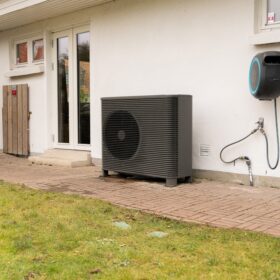
A closer look at Aira’s heat pump tech
Swedish manufacturer Aira launched its heat pump in Europe in 2024. The company told pv magazine it is now developing a full home energy management system proposition to integrate heating, solar, battery energy storage and electric vehicle charging.
Romanian organization proposes new prosumer model for apartments
The Romanian Association of Energy Prosumers and Communities (APCE) is urging the government to introduce a new prosumer model that allows apartment residents to benefit from surplus solar energy generated by rooftop systems.
Eskom calls for registration of all grid-tied solar installations
South African utility Eskom is urging consumers with grid-tied rooftop solar to register their systems and integrate them with the national grid, waiving registration fees until March 2026. Off-grid installations must still prove they operate independently.

China to switch from FITs to market-oriented renewables pricing
China will replace its feed-in tariff (FIT) system with a fully market-driven renewable energy pricing model by June 2025, shifting wind and solar projects to competitive bidding and market transactions. The reform aims to enhance competition but raises uncertainty over future returns for investors.

US startup developing defrost-free residential heat pump for cold climates
TerraVis Energy claims its new heat pump system can achieve a seasonal coefficient performance of 3.5 and deliver 30 C of heat indoors at -50 C. CEO Lorenzo Rossi told pv magazine that the system could be produced at a lower cost than conventional models.
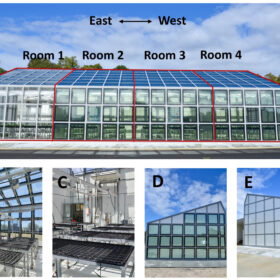
Photovoltaic windows can reduce energy consumption in greenhouses by 57%
Developed by a research team including experts from Australian specialist Clearvue, the new PV windows were also able to reduce water usage in a greenhouse by 29%. The group believes that a fully glazed solar greenhouse could offset up to 100% of the energy consumption in worldwide locations by using adaptable and efficient temperature control techniques.
