Novel busbar-free cell design for shingled solar modules
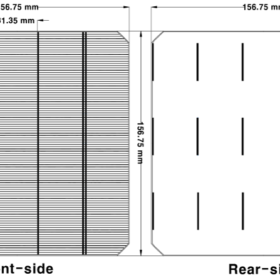
South Korean scientists have fabricated a busbar-free solar cell for shingled modules that uses 60% less silver than its busbar counterparts. A module with the new cells had almost the same performance as a reference shingled panel built with a conventional cell design.
JA Solar reveals results of year-long n-type, p-type tests
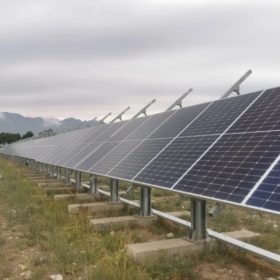
JA Solar said that tests have shown that n-type modules have a 3.9% higher power yield than their p-type counterparts. TÜV Nord has confirmed the results.
ZSW, Tubesolar achieve 14% efficiency for thin-film agrivoltaic solar tubes
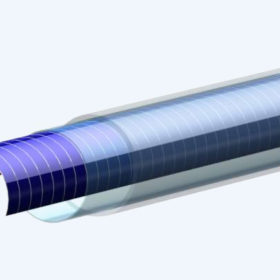
TubeSolar and the Centre for Solar Energy and Hydrogen Research Baden-Württemberg have achieved a power conversion efficiency of 14% for a photovoltaic film based on perovskite.
Small cracks have negligible effect on solar cell performance
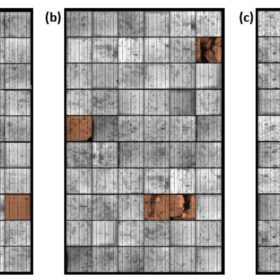
UK researchers have found that crack percentages of up to 11% have a very limited impact on solar cell performance. They also ascertained that hotspots are likely to arise when the crack percentage is in the range of 11 to 34%.
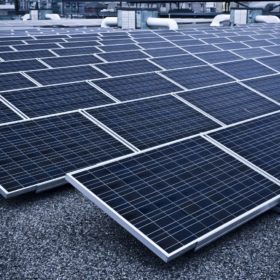
There’s big money in recycling materials from solar panels
Recycling solar panels keeps them out of landfills, but also provides much-needed raw materials with Rystad Energy projecting a value approaching $80 billion by 2050.
US government invests $56 million in solar manufacturing and recycling
The initiatives will support recycling processes, manufacturing perovskite PV cells, boosting thin-film cadmium telluride module manufacturing, and creating easier and more effective pathways to commercialization.

Applying perovskite solar cells onto BIPV steel products
Swansea University will collaborate with Indian multinational Tata Steel to investigate perovskite solar cell materials that could be applied directly onto coated steel to make building-integrated PV components. The partnership will add to an “active buildings” project that the Welsh university has been running for several years.

Chinese PV Industry Brief: Solar manufacturers report strong financial performances
JA Solar, TCL Zhonghuan, GCL Tech, and Ganfeng Lithium all announced increasing profits and revenue. Meanwhile, JinkoSolar expands its hydrogen business and Xinte Energy secures another big polysilicon supply deal.
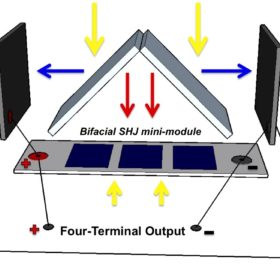
Four-terminal multijunction approach for bifacial modules
Scientists tested bifacial PV devices based on silicon and gallium arsenide cells connected in a four terminal layout. They note that the four terminal design offers significant advantages over more common two terminal devices, allowing for a 17% (relative) increase in efficiency thanks to better absorption of light reaching the rear side.
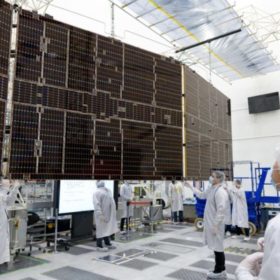
Solar panels power the largest optical telescope in space
Our deepest view into the universe is powered by PV. NASA was one of the earliest adopters of solar technology, and it continues to be an important feature of spacecraft today.
