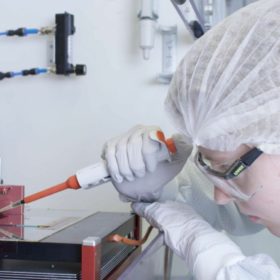
Eco-friendly solvent for a 16.7% perovskite solar cell
Scientists in Germany looked to eliminate the use of toxic solvents in the production of perovskite solar cells, replacing them with a more environmentally material called dimethyl sulfoxide (DMSO) which has so far proved difficult to integrate into processes suitable for large-scale production. The group demonstrated a scalable blade coating process using DMSO as the only solvent, and reached cell efficiencies close to those achieved using more toxic substances.
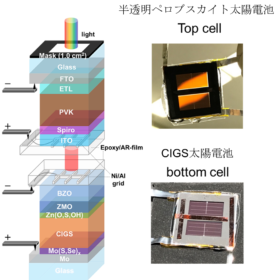
Four-terminal tandem perovskite/CIGS solar cell with 26.2% efficiency
Japanese scientists have developed a tandem device with a 19.5%-efficient perovskite top cell. They claim to have created a semi-transparent perovskite solar cell while maintaining high performance.

Shipping costs remain key challenge for solar sector
The solar industry will face elevated shipping costs and supply disruptions for at least another year until the global ocean freight system starts to normalize.

Trina Solar achieves 24.5% efficiency for 210 mm p-type PERC solar cell
Trina Solar said the State Key Laboratory of PV Science and Technology in China has confirmed the efficiency rating of its latest solar panel.
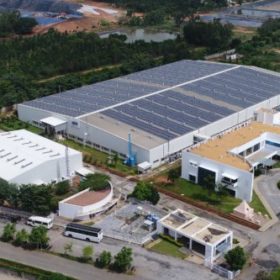
India’s Emmvee eyes wafer-to-module production
India’s Emmvee Photovoltaic has a 1.25 GW module manufacturing facility that can produce polycrystalline and mono PERC solar panels, with the ability to upgrade to TOPCon. By the end of 2023, it plans to raise its PV module capacity to 3 GW.
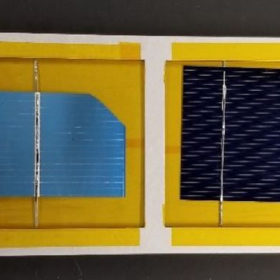
Role of UV in solar cell degradation
US scientists have tested a range of modern cell designs under strong ultraviolet light and have found that many of them, including p-type PERC and n-type heterojunction cells, are more susceptible to degradation than older back surface field designs. They noted that the rear side of bifacial cells may be particularly vulnerable.

Chinese PV Industry Brief: Longi, Shenzhen Energy partner on inverters
Longi has revealed plans to enter the inverter business through a partnership with Shenzhen Energy, while Solarspace has announced plans to open a 16 GW cell factory in Anhui province.
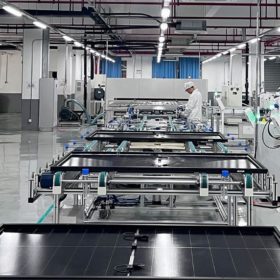
Chinese manufacturer unveils 210 mm busbarless heterojunction solar module
China’s Cando-solar Photoelectric Technology said its newest solar panel has a power output of up to 425 W and a power conversion efficiency of up to 22.1%. Its temperature coefficient is -0.24% per degree Celsius.

US lifts tariffs on solar products from Canada, Mexico
Canada, the United States, and Mexico signed an agreement to lift Trump-era tariffs, after an independent panel said that the duties violated the provisions of existing trade agreements.
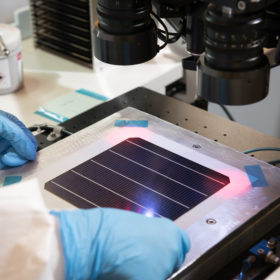
Environmental impacts of perovskite PV
A life-cycle analysis of perovskite-silicon tandem modules indicates that additional environmental impacts in manufacturing are more than offset by the higher energy yield over their lifetime.
