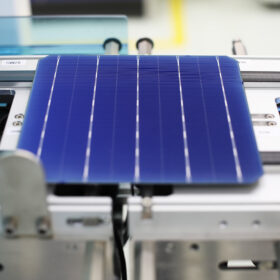
More PV manufacturers expected to adopt copper metallization in 2026
Rising silver prices are pushing PV manufacturers toward copper-based metallization, with DK Electronic Materials targeting 2026 for large-scale deployment of high-copper paste solutions, while Fraunhofer ISE warns efficiency trade-offs remain unacceptable.

First Solar wins key round in TOPCon patent dispute
The U.S. federal patent office rejected separate challenges from JinkoSolar, Canadian Solar and Mundra Solar to invalidate intellectual property that First Solar claims is fundamental to the manufacturing of crystalline silicon solar cells.

DK Electronic Materials client adopts copper paste in GW-scale cell output
China-based metallization paste supplier DK Electronic Materials says a major unnamed customer has adopted its high-copper metallization paste for gigawatt-scale solar cell production, combining copper paste with a seed-layer silver paste compatible with n-type and tunnel oxide passivated contact (TOPCon) 3.0 processes.

Scientists achieve 25.4% efficiency in perovskite solar cells with enhanced stability using multivalent ligands
Researchers have used multivalent amidinium ligands to boost perovskite solar cell efficiency to 25.4%, achieving over 95% stability after 1,100 hours at 85 C. The proposed approach enables controlled low-dimensional passivation layers, offering a practical route for durable, large-area perovskite devices.

UNSW researchers set new efficiency record of 11.02% for antimony chalcogenide solar cell
The Australian scientists designed the cell with a sodium sulfide additive to achieve uniform sulfur and selenium distribution, improving charge transport.
This controlled elemental layering reduces energy barriers and defects, enabling a certified efficiency of 10.7%.

Silver price hits all time high of $94.73 an ounce
Silver prices hit a record $94.73/oz on January 19. Silver analyst Philip Newman tells pv magazine the metal could soon surpass $100/oz, increasing pressure on PV module manufacturers to reduce silver usage.
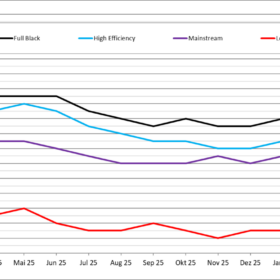
European PV market faces potential 2026 price shock from China export tax
China’s PV manufacturing sector is operating at full capacity ahead of an April 1 export tax change, contributing to module price increases of 20% to 30% in parts of the supply chain and raising risks for price-sensitive European commercial and utility-scale projects in early 2026.
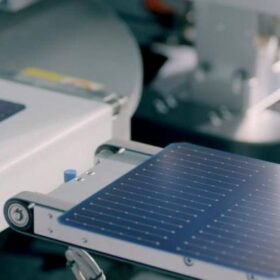
TCL Zhonghuan aims for controlling stake in DAS Solar
TCL Zhonghuan has entered exclusive talks to acquire a controlling stake in module manufacturer DAS Solar, marking one of the most significant consolidation moves in China’s photovoltaic manufacturing sector as the industry faces continued financial pressure and overcapacity.
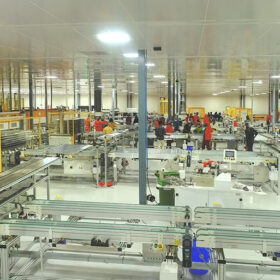
Vikram Solar moves entire module portfolio to G12R
Vikram Solar Ltd today announced the adoption of G12R format across its entire PV module portfolio. The company said the move reflects broader industry trends toward larger-format wafers, high-efficiency n-type technologies, and bifacial module designs aimed at improving energy yield and project economics.

Chinese PV Industry Brief: Major solar manufacturers report steep full-year losses
JA Solar, TCL Zhonghuan, JinkoSolar, Trina Solar and Daqo each announced significant losses for full fiscal year 2025 amid continued price declines and overcapacity.
