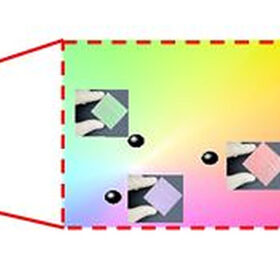
New techique to color flexible thin-film BIPV, VIPV panels
Researchers in South Korea have developed a process to enable colored and flexible, thin film modules suitable for vehicle and building-integrated PV applications. It is reportedly a low-cost process that does not significantly impact power conversion efficiency.

Reliance chairman outlines plans for HJT solar modules, sodium-ion batteries
Mukesh D Ambani, the chairman and managing director of Reliance Industries, says the company aims to open a fully integrated solar gigafactory by the end of 2025. It also plans to initiate megawatt-level sodium-ion cell production by 2025.

PV cell technology trends
Ongoing innovation in PV cell technology will have major impacts as solar is deployed at a “multi-terawatt scale” over the next two decades, according to a global team of scientists.

Chinese PV Industry Brief: Irico to expland solar glass capacity
Irico says it has posted revenue of CNY 1.28 billion ($176.65 million) for the first half of the year, while Daqo has announced a share repurchase program.
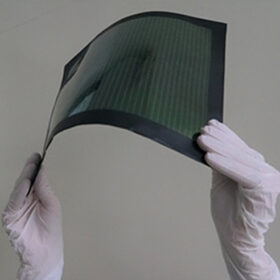
Toshiba claims 16.6% efficiency for polymer film-based large-area perovskite solar module
Japanese electronics giant, Toshiba, is continuing to improve the performance of its perovskite solar cell technology.
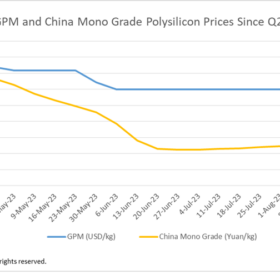
Global polysilicon prices drop, China polysilicon prices rise
In a new weekly update for pv magazine, OPIS, a Dow Jones company, provides a quick look at the main price trends in the global PV industry.
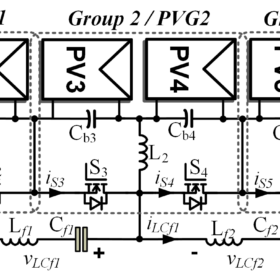
New DPP converter to improve yield in PV systems under permanent mismatch
Brazilian scientists have created a new hybrid converter topology based on differential power processing (DPP) that can help reduce power losses in PV systems under permanent mismatch conditions, as well as temporary ones caused by partial shading, dirt and snow. The converter consists of a hybrid topology that combines the PV-to-PV and PV-to-Bus architectures and reportedly solve some of the issues presented by both configurations.
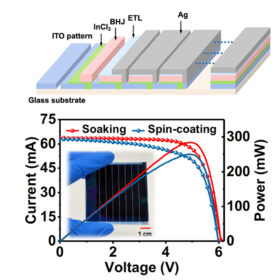
Organic cell based on HTL made of indium chloride layer achieves 18.92% efficiency
Scientists in China have fabricated an organic solar cell based on an indium tin oxide hole transport layer modified with an interfacial layer made of recycled indium chloride (InCl3).

Global sales of off-grid solar energy kits hit 9.5 million units in 2022
In 2022, off-grid solar kit sales reached a record-breaking 9.5 million units. This is almost 1 million more than the 8.5 million units sold in 2019.
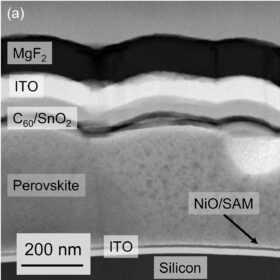
Monolithic perovskite-PERC tandem solar cell with 23.7% efficiency
Dutch scientists have developed a perovskite-PERC tandem solar cell based on a new type of tunnel recombination junction that reportedly offers an improved device efficiency distribution. The cell uses a nickel(II) oxide layer that is intended to reduce electrical shunts in the perovskite top cell.
