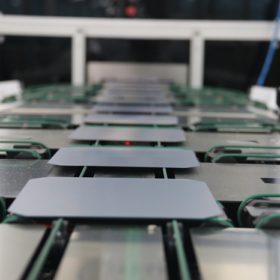
Chinese PV Industry Brief: Shuangliang secures another major wafer supply deal
The Chint group has also agreed to sell a portfolio of distributed solar projects with a capacity of 493 MW.
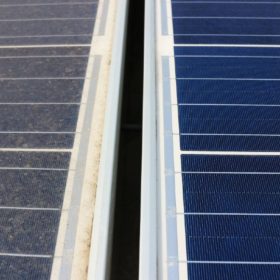
Hydrophobic anti-soiling coating for solar modules
A U.K. research group is developing an anti-soiling solution produced via a chemical process compatible with glass manufacturing. The Engineering and Physical Sciences Research Council is providing $1.6 million of funding for the project.

Indian transformer manufacturer to set up 4 GW solar fab
Shirdi Sai Electricals, an Indian transformer manufacturer and EPC contractor, has placed a $252.16 million incentive bid to set up a fully integrated, 4 GW polysilicon-to-module fab under the Indian government’s production-linked incentives scheme.
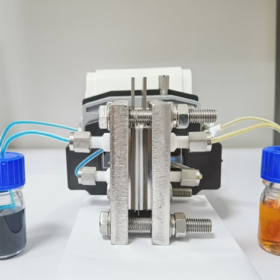
Redox flow battery with capacity retention of 99.98% per cycle
The battery was fabricated by Chinese scientists with a low-cost electrolyte made of a derivative of TEMPO, which is a well-known electroactive aminoxyl radical used with several applications in chemistry and biochemistry. According to the researchers, the battery shows high redox potential and is crossover-free.

Lazard’s LCOE report raises concerns about future price stability
A new Lazard report has highlighted worries about price stability and product availability, as demand for battery products continues to increase.

Chinese PV Industry Brief: Longi considers overseas factory, GCL-Poly switches on 20,000 MT polysilicon fab
Furthermore, DaSolar has unveiled a plan to build a 5 GW module factory in Fujian and Maxwell Technology said it will provide a 500 MW heterojunction solar cell production line to Anhui Huasun New Energy.

Reuse or replace? IEA PVPS analysis considers all options for underperfoming PV modules
In a new report, experts from the International Energy Agency Photovoltaic Power System Programme (IEA-PVPS) have assessed the economical and environmental benefits of repairing and reusing or replacing solar modules that are not complying with a 30-year expected lifetime. They found that reusing offers the best environmental impact in all cases, while the profitability of this option is currently guaranteed only by rooftop PV under certain conditions. As for large-scale solar, module replacement remains the most competitive option.
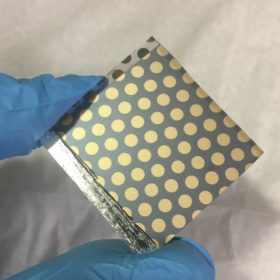
Rear-side passivation for 17.4% efficient CdTe thin film
Scientists in the United States investigated adding a layer of copper-aluminum oxide to the rear side of a cadmium-telluride thin film cell, finding positive impacts on carrier lifetime and efficiency. With further work, the scientists say, the discovery could open up new routes to higher efficiencies in CdTe solar cells.

US Commerce Department throws out anti-dumping petitions
The dismissal is a win for the Solar Energy Industries Association, which vigorously opposed the request by American Solar Manufacturers Against Chinese Circumvention (A-SMACC) for anti-dumping and anti-circumvention (AD-CVD) tariffs
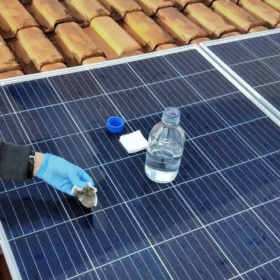
Solar panels host microbes that may be used for biotech applications
Scientists in Brazil have found that photovoltaic modules may be a repository of specialized microbes in tropical regions. According to them, these micro-organisms may be used in sunscreens, pigments for processed foods, chemicals, textiles, pharmaceuticals, and cosmetics.
