
Norway deployed 51 MW of solar in 2019
The figure took the nation to a cumulative 120 MW at the end of the year, according to figures published by Norwegian solar industry organization the Solenergiklyngen. Around 2 MW of the capacity added in 2019 came in the form of off-grid projects.

Solar tariffs of less than $0.034 not financially viable in India
Solar developers in India must consider a range of risks to secure reasonable returns on solar projects, according to research by the Institute for Energy Economics and Financial Analysis and JMK Research & Analytics.
New method to measure cell voltages in operational PV modules
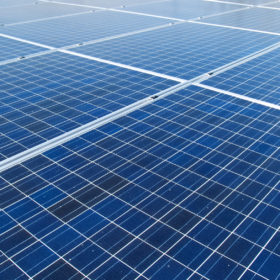
Scientists in Japan have proposed a new model to estimate cell voltages in solar modules by irradiating the cells with a weak modulated laser light. The method could be used to detect hot spots and other panel-degradation issues, such as potential induced degradation (PID) peeling, cracking, and poor contacts.
Solar arrays on wave energy generators, along with wind turbines
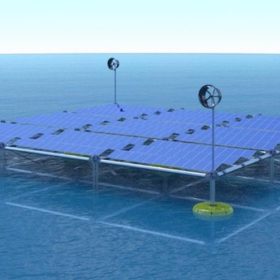
German startup Sinn Power has combined wave, wind and solar power to create what it claims is the world’s “first floating ocean hybrid platform.”

Schletter increases production capacity in China
The German mounting system maker has expanded its production capacity in Shanghai after opening a new, bigger fab in March.

Czech government plans retroactive cuts for PV incentives, again
According to the Czech Solar Association, the move against solar will likely trigger defaults for thousands of PV projects. The Czech government also plans to build more nuclear power plants and has vowed to extend the lifespan of its coal-fired plants.
New solar module backsheet based on polyamide
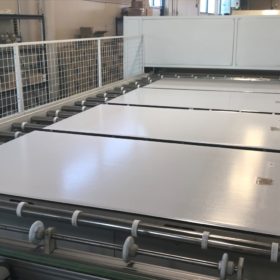
Backsheet manufacturer Tomark-Worthen LLC has developed a new polyamide backsheet under the U.S. Department of Energy’s Sunshot initiative. The product is based on a novel polyamide-ionomer alloy created by U.S. chemicals producer Dow. The alloy, as well as the other materials in the backsheet, are stabilized with a UV/anti-oxidant package that slows down the damaging effects of ultraviolet radiation. The manufacturer claims that the backsheet is 25-30% more affordable than high-efficiency fluoropolymer products.
Northvolt unveils modular lithium-ion battery
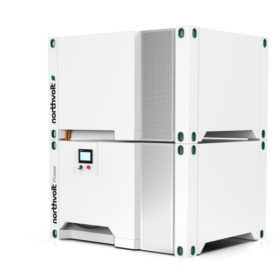
The Swedish storage system manufacturer said its Voltpack Mobile System can be used in different market segments, particularly for remote or weak grids. The battery has a scalable storage capacity ranging from 245 kWh to 1,225 kWh. Swedish utility Vattenfall is now testing the system’s capabilities.
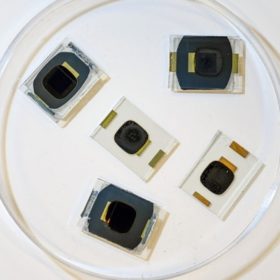
Australian scientists claim breakthrough in perovskite stability
In a world-first, perovskite solar cells developed by Australian scientists have passed a series of heat and humidity tests using a low-cost solution to overcome some of the challenges that are hindering the technology’s commercialization. The scientists did this by suppressing the decomposition of the perovskite cells using a simple, low-cost polymer-glass blanket.

Chinese PV Industry Brief: Jinko Power and Trina Solar go public, profit growth for Daqo, and new dates for SNEC
Jinko Power has moved forward with plans to list shares on the Shanghai Stock Exchange, while Trina Solar said that the China Securities Regulatory Commission has approved its application for its own initial public offering. Polysilicon producer Daqo, meanwhile, reported solid first-quarter results, and the organizer of the SNEC solar show changed the exhibition’s dates and location once again.
