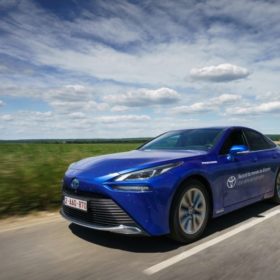
Madrid taxis to be powered by solar hydrogen
Spanish developer FRV has agreed to participate in a €100 million effort to generate hydrogen via a 10 MW electrolyzer, powered by a 20 MW solar plant.
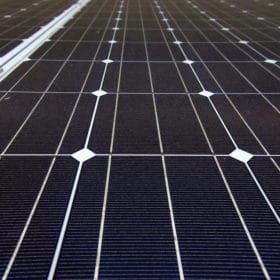
Solar module cooling technique based on multiple phase-change materials
Academics have utilized three PCMs, known as RT26, RT35, and RT42, and decided to pack them ascendingly depending on their melting points and heat-flow direction. The system is claimed to allow lower melting rates and longer thermal management of the modules.

Solar microgrid to offer protection from fire threats
Remote grids provide enhanced reliability, lower risk profiles, and lower total costs than existing distribution lines.
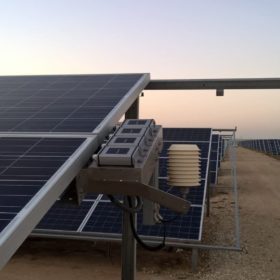
‘More room” remaining for small, medium PV projects in Spain
pv magazine recently spoke to Asier Ukar, managing director & senior consultant at PI Berlin in Spain, about the Spanish solar market, PV module prices, the most common failures in installations, and PV manufacturing in Europe.
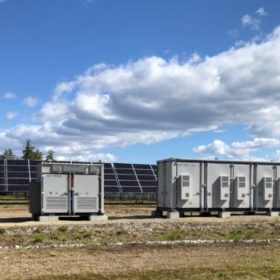
Energy storage deployments slowed in the US in Q1, but the sector is on track for 3x growth in 2021, report says
Favorable federal tax policies and state regulatory reform could help the storage sector notch even higher rates of growth.
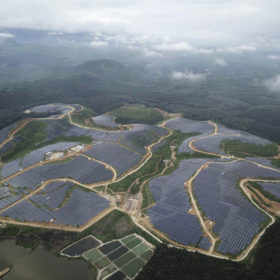
Chinese PV Industry Brief: Huawei launches new unit for renewables and electric vehicles
The technology company and inverter maker has created a new unit to operate in the renewables and e-mobility sectors. Elsewhere, China’s largest e-commerce company, JD.Com, has signed an agreement with the world’s biggest wind company, GoldWind, to establish a renewables joint venture.

Simplifying solar cell deposition
Scientists in Germany have developed a new process for deposition of silicon dioxide layers during cell production. Without the need for high pressure, flammable gases, or vacuum conditions, the process could lead to cost reductions for cell manufacturers, provided it can be developed and applied in a large-scale production setting.

Indian Railways tenders 740 MW of solar on its vacant land
The capacity will be set up on a build, own, operate basis and bidding in the tender closes on August 26.
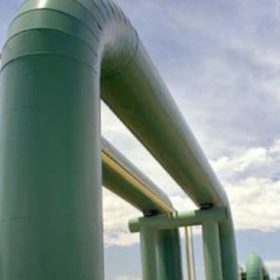
The Hydrogen Stream: 2.7 GW of operational electrolyzer capacity expected for Europe by 2025
According to two new pieces of research, Europe is on track to reach 2.7 GW of operational hydrogen electrolyzer capacity by 2025 and most of this capacity is expected to be located in Germany. Furthermore, three European gas associations have assessed the competitiveness of the different transportation options for hydrogen and have found it depends on the distance over which hydrogen is transported, as well as on scale and end-use.

Perovskite solar cell with 19.1% efficiency via CO2 doping
Thanks to a carbon dioxide doping technique, the solar cell interlayers exhibited conductivity around five times higher than that of a perovskite cell based on interlayers doped with oxygen. The device also showed an open-circuit voltage of 1.14 V, a short-circuit current density of 21.2 mA cm2 and a fill factor of 0.79.
