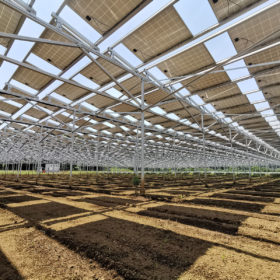
Japan releases new guidelines for agrivoltaics as installations hit 200 MW
The Japanese authorities have released new guidelines for the development of agrivoltaics projects and have excluded installations that do not host crops or livestock in the planning phase. Analyst Takeshi Magami says that agrivoltaics can be developed under the feed-in tariff scheme, in the free market via PPAs, or through a rebate scheme covering 50% of initial investments.
Canadian Premium Sand to build solar glass factory in Manitoba
Canadian Premium Sand has revealed plans to build a solar glass manufacturing facility in the Canadian province of Manitoba.
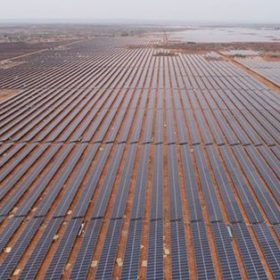
India hits 46.2 GW of installed PV capacity
India recorded 46.2 GW of installed solar capacity at the end of October, led by installations in the states of Rajasthan, Karnataka, and Gujarat.
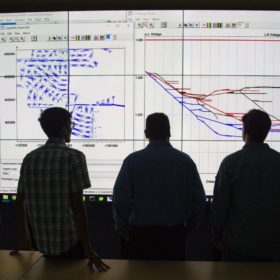
A cleaner grid arrives as renewables replace fossil fuels
In 2022, the United States is projected to massively increase its solar and wind generating capacity, extending a nearly two-decade march toward a cleaner grid.
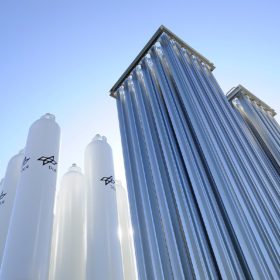
The Hydrogen Stream: Electrolyzer ramping from 0 to 50,000 amperes in less than 10 seconds
Developed by Canada-based Hydrogen Optimized, the electrolyzer can be used to stabilize electrical grids and optimize energy recovery from intermittent renewable power sources such as solar and wind. Furthermore, this week four more big international partnerships for developing green hydrogen were announced across Germany, the Middle East, and Australia.
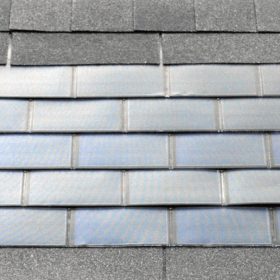
Defining BIPV
Incorporating solar into our built environments represents an opportunity for hundreds of gigawatts to be installed worldwide without taking up any additional land. In many cases though, this will require solutions beyond typical rooftop PV installations and much closer cooperation between the PV and construction industries. A new report published by IEA PVPS looks to bring together the interests of both worlds, and clearly categorize both the building envelope and energy functions of different BIPV components.
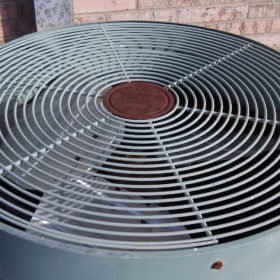
Non-technical factors influencing market acceptance for solar heat pumps
The lack of proper business models, high upfront costs, and long payback periods are the key barriers to enabling the wider adoption of solar-powered heat pumps, according to recent research. Other factors reducing market acceptance are a lack of information on the technology and sociodemographic factors like public perception and peer effects.

Floating PV mounting structure for harsh climatic conditions
Developed by Chinese specialist Mibet, the floating PV structure can reportedly endure wind and snow loads of up to 42m/s and 1KN/㎡, respectively, in all water environments. It was recently deployed in Poland, at a location where temperatures may reach as low as 40 degrees Celsius.
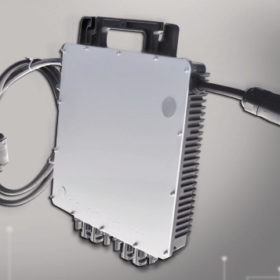
Chinese PV Industry Brief: Microinverter manufacturer Hoymile raises $880 million through IPO
The Hangzhou-based microinverter maker is now listed on the Shanghai Stock Exchange (SSE).

U.S. Trade Commission recommends extension of Section 201 solar tariffs
SEIA responds that a new round of tariffs will hamper U.S. solar development and forestall this administration’s vision of becoming a world leader in clean energy.
