
U.S government sets preliminary countervailing duties on solar imports from India, Indonesia and Laos
The U.S. Department of Commerce has issued preliminary findings that solar manufacturers in India, Indonesia and Laos benefited from government subsidies, paving the way for countervailing duties of up to 143.30%.

First Solar announces licensing agreement with Oxford PV, alleges new TOPCon patent infringements
The U.S. thin-film solar module manufacturer’s stock price fell more than 12% in extended trading following the earnings announcement, partly due to lower-than-expected guidance for 2026 sales and revenue.
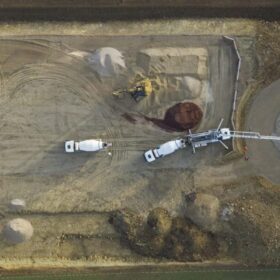
Vattenfall to combine wind and solar with new connection concept
Vattenfall says it will connect a 7.6 MW solar plant to a 17 MW wind farm in Germany, allowing both to operate through a single grid connection point.

‘Garbage in, garbage out’ – solar industry debates reality of AI
Artificial intelligence can accelerate the planning, construction, and operation of photovoltaic systems, as shown at the recent Solar Quality Summit in Barcelona, Spain. But its effectiveness depends on data quality, as poor data, unclear responsibilities, and weak documentation can become major cost drivers.

Poland adds 3.6 GW of solar in 2025
Poland’s cumulative solar capacity reached 24.8 GW by the end of 2025, with last year’s growth led by C&I and large-scale installations.
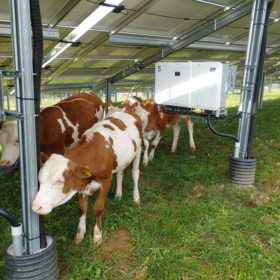
How to protect animals from lightning in agrivoltaics
Researchers in Germany assessed lightning risks in livestock-integrated agrivoltaic systems, identifying key injury mechanisms and establishing safe step and touch voltage limits. Their simulations showed edge strikes and conductive structures pose the highest hazards, highlighting the need for livestock-specific earthing designs and mitigation strategies.
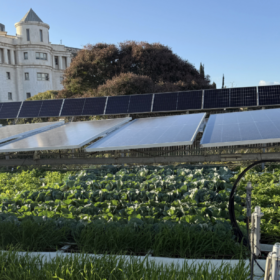
Israel approves rules for agrivoltaics
A zoning masterplan for agrivoltaics in Israel specifies solar panel coverage must not exceed 30% of the cultivated area. The lower edge of panels must be at least 1.5 m above the ground for field crops, increasing to 4.5 meters for orchards and other crops.
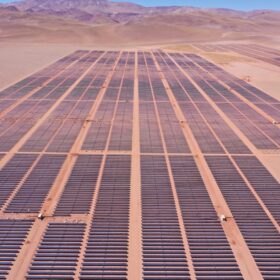
Argentina adds 810 MW of solar capacity in 2025
Argentina added around 810 MW of solar PV capacity in 2025, bringing total installed PV capacity to 2,483 MW, according to data from Compañía Administradora del Mercado Mayorista Eléctrico (CAMMESA).

ACWA Power to build 2 GW of solar in Türkiye
Saudi Arabian energy giant ACWA Power will build two 1 GW solar power plants in Türkiye as part of a wider investment agreement covering 5 GW of new renewables capacity in the country.

Solar curtailment rises in Chile as grid constraints persist
Renewable curtailment in Chile reached 6,084 GWh in 2025, up 7.8% year on year, underscoring mounting transmission congestion as the country’s power mix becomes increasingly renewable.
