
Multiple UK heat pump laws recommended for revision
Scrapping size limits on outdoor compressor units and removing location restrictions are just two of the eight policy changes the United Kingdom government should consider in its campaign to install 600,000 heat pumps by 2028, according to consultancy firm WSP.
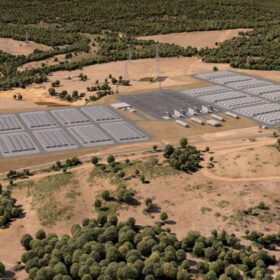
Synergy secures planning approval for 2 GWh big battery
Australian utility Synergy has secured approval for its plan to build a 500 MW/2,000 MWh battery energy storage system in Western Australia.
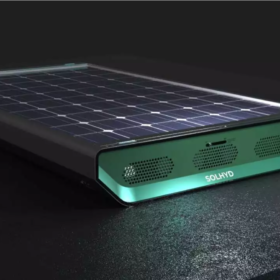
KU Leuven spinoff plans MW-scale production of solar-hydrogen panels
Solhyd, a KU Leuven spinoff, is refining its technology to reach megawatt-scale production of hydrogen-producing solar panels with a €6 million ($6.5 million) investment from a consortium of Flemish investors.
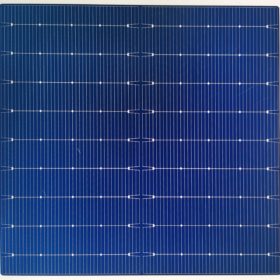
Chinese PV Industry Brief: Polysilicon prices continue to fall
Polysilicon prices fell by as much as 0.63% in China this week, according to the China Nonferrous Metals Industry Association (CNMIA).

Two-dimensional supercrystal produces hydrogen from formic acid, sunlight
A research team in Germany has developed bimetallic two-dimensional supercrystals with remarkable catalytic properties. They can be used to produce hydrogen from formic acid decomposition and reportedly achieve record-breaking results.
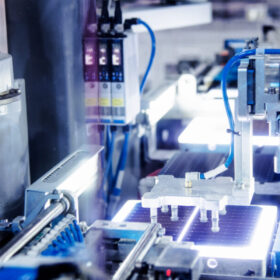
Energetica Industries files for insolvency
Energetica Industries, an Austrian PV manufacturer, can no longer meet its payment obligations. A total of 120 creditors and 94 employees are affected by the insolvency proceedings.
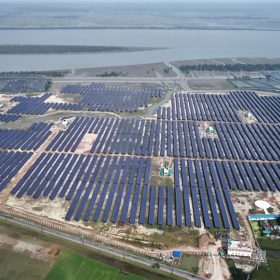
Bangladesh approves 1.5 GW of solar
Bangladesh has approved more than 1.5 GW of solar projects over the past seven months, with recent developments including tariffs for 200 MW in November and 310 MW in October.
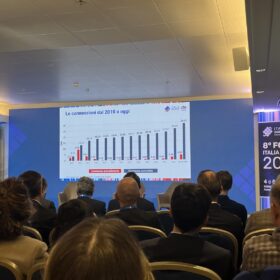
Key takeaways from Italia Solare Forum
The Italia Solare Forum this week in Rome highlighted the renewed importance of the large-scale solar segment in Italy and underscored the huge potential of energy communities, given the EU’s recent approval of a dedicated incentive scheme.
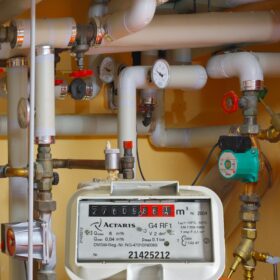
EU likely to phase out fossil fuel-powered boilers by 2040
The European Parliament and European Council yesterday provisionally agreed to phase out fossil-fuel boilers in the next two decades, among a raft of other infrastructure recommendations aiming to boost infrastructure energy efficiency. Europe’s peak body for heat pumps, the European Heat Pump Association (EHPA), welcomes the news.

US solar industry back on roller coaster through 2026
The Solar Energy Industries Association (SEIA) and Wood Mackenzie predict that 33 GW of solar will likely be added in the United States in 2023. Despite economic challenges in the near future, solar is expected to be the largest source of generating capacity by 2050.
