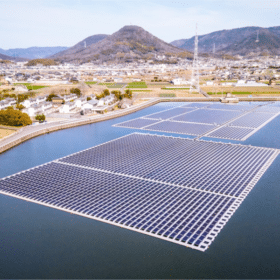
Sumitomo Mitsui Construction deploys in-house floating PV tech
Sumitomo Mitsui Construction has used its PuKaTTo proprietary tech for a 2 MW floating PV project in Japan’s Kagawa prefecture. It said its durable, easily deployable floats can host 60-cell and 72-cell solar modules.
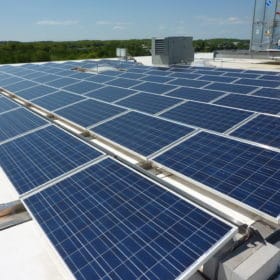
Hybrid operational strategy to use lithium-ion storage in commercial PV arrays
Lithium-ion batteries can not only improve self-consumption in commercial PV systems but are also able to efficiently perform peak shaving and price arbitrage, according to an international research group which has proposed a new strategy to calculate the best system configuration in terms of costs and revenue. The scientists specified, however, that the novel strategy may become effective only if storage system prices will drop under $250/kWh.
First Solar signals interest in US tellurium supplies for solar panel production
Rio Tinto plans to spend nearly $3 million on a facility in Utah to recover tellurium, a critical mineral used in solar panels.
Hard times for french PV module maker Photowatt
According to French financial newspaper Les Echos, EDF, the main shareholder of PhotoWatt, is considering closing the production in Bourgoin-Jallieu. The Auvergne-Rhône-Alpes regional council is mobilizing to save the company and announces that a regional company may acquire the module manufacturer.
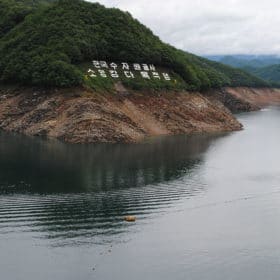
South Korea wants to deploy another 2.1 GW of floating PV by 2030
The country’s Ministry of Environment has revealed that five dams have already been identified for a total of 147 MW of projects. The new target is part of South Korea’s plan to become carbon-neutral by 2050.
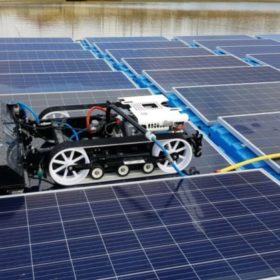
Cleaning robot for floating PV
A cleaning robot optimized for floating PV installations was developed by German manufacturer TG hyLIFT. Also suitable for ground-mount PV, it uses only water without any type of detergent, and is powered by batteries. The robot is now being tested at a floating PV array in Spain.
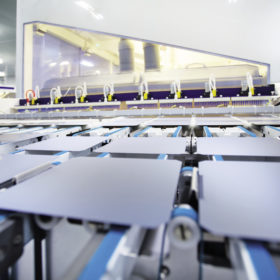
Chinese PV Industry Brief: Increasing polysilicon prices and new supply deals
PV Infolink reported a considerable increase in prices for polysilicon and wafer prices for last week. Both products saw their average price increase by over 9% compared to the previous week.
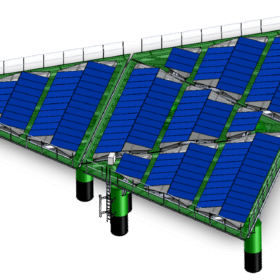
Dutch startup develops offshore floating PV platform
Dutch startup SolarDuck has developed a triangular structure for floating PV that resembles an offshore oil platform. CEO Koen Burgers told pv magazine that it keeps panels more than 3 meters above the water surface, and claimed that the structure can handle waves and dynamic loads. It will be used in a Dutch pilot project from April.

Kenyan utility kicks off tender for small solar parks
KTDA Power Company is seeking developers for up to ten small-sized solar parks. The facilities are expected to have a capacity of between 300 kW and 1 MW.

Novel solar module transport solution from Australia
Safety when transporting solar PV modules from warehouse to job site is an ongoing issue for installers but one Australian solar company has designed and manufactured a simple yet effective racking system that helps allay those concerns. The racking system comprises an aluminum frame fitted with opposing channels into which the solar modules slide.
