
Swiss startup offers lifetime guarantee for second-life batteries
Switzerland startup Evolium Technologies’ subscription-based business model offers residential battery owners a lifetime guarantee on second life batteries. The startup tests and remotely monitors each battery cell so it can alert customers when a cell is under-performing.
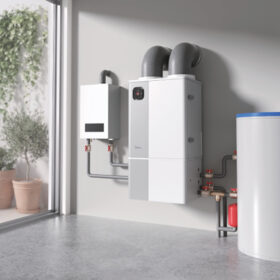
Midea unveils PV-compatible indoor heat pump for space-constrained residential applications
Midea has launched a compact indoor air-source heat pump for retrofit and space-constrained homes. The R290-based system offers up to 4.45 kW output, a coefficient of performance of 4.5 and smart PV-compatible controls.
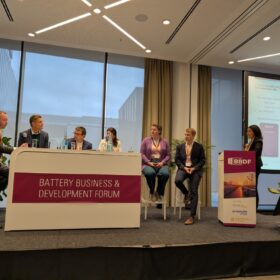
BBDF 2026: How financing standalone vs. co-located projects really works
The “lab” session at Battery Business & Development Forum 2026 made transparent how different stakeholders evaluate and view energy storage projects between standalone and co-located options, and where views diverged.

US startup begins manufacturing grid-scale flywheel ESS
SOSV-backed Qnetic is aiming to raise $20 million in 2026. Over the next two years it will work with the National Lab of the Rockies and other partners on field testing and validating its technology across multiple use cases.
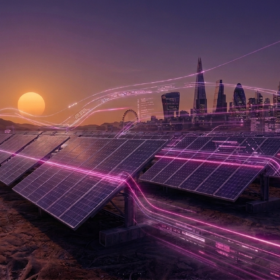
UK defining stronger energy cybersecurity rules after Poland attack
The UK government is proposing stronger cybersecurity rules for electricity and gas sectors, prompted by recent attacks on European energy infrastructure, including a recent incident involving solar power plants in Poland. The plans would extend baseline cybersecurity requirements to all licensed energy organizations and could also adjust compliance thresholds under NIS regulations.
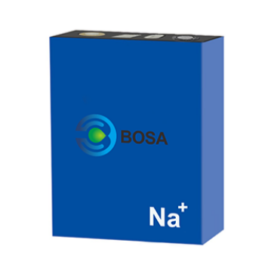
Sodium-ion cells launched for energy storage by another Chinese mid-tier battery company
Bosa Energy in Hubei, China, has launched sodium-ions cells for stationary energy storage, with a volumetric energy density of 206 Wh/L
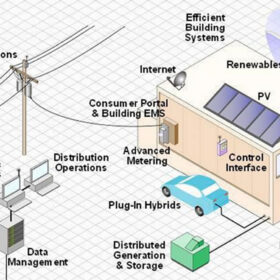
Industry 4.0 technologies raise cyber risks for smart renewables grids
An international research team developed a multi-stage intrusion detection system that uses supervised and unsupervised AI techniques to detect and mitigate cyber threats in smart renewable energy grids. The system can reportedly achieve high accuracy, low false positives, and real-time detection, outperforming traditional intrusion detection system models.
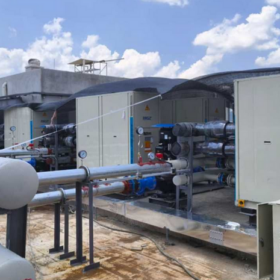
PVT-driven tower heat pump for building retrofits
Researchers in China demonstrated that integrating energy tower heat pumps with evaporator-side boilers, air-source heat pumps, or solar-assisted systems can significantly improve winter heating efficiency and economic performance in commercial buildings. Among the four configurations tested, the evaporator-side boiler and solar-assisted systems delivered the highest performance and energy savings, offering a sustainable, low-carbon alternative to conventional heating.
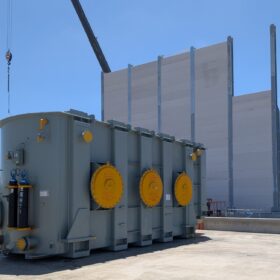
Why BESS insurers are sweating transformers and contractor errors over battery fires
The BESS insurance risk profile is shifting. In an exclusive interview, Tokio Marine GX underwriter Michael Carrington explains why insurers are looking past battery fires and sweating over supply chain bottlenecks, high-voltage transformers, and costly EPC integration errors.
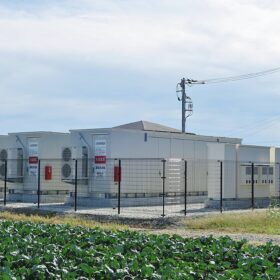
Panasonic claims world’s first trial of cybersecurity monitoring for grid-scale BESS
A Japanese joint-pilot will test grid-scale BESS with a range of local and remote attack vectors, with cybersecurity monitoring to watch for indications of anomalies.
