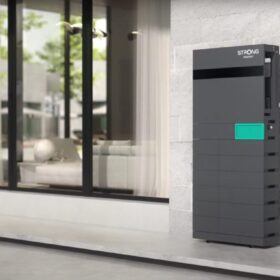
Strong Energy launches residential lithium iron phosphate battery
Cologne-headquarterered Strong Energy’s new all-in-one battery storage system Alfred 10 comes in different versions with a nominal capacity between 12 kWh and 24 kWh.

Standalone PV-hydrogen-battery system for EV charging
Researchers in Pakistan have tested several configurations of an offgrid PV-hydrogen system intended to power EV chargers. The system achieved the lowest levelized cost of electricity when it was combined with battery storage.

Panasonic testing smart thermostats in residential heat pumps
Panasonic will integrate new smart thermostats and an energy management software in its Aquarea system from November. The new solutions are also designed to enable PV system owners to manage their heat pumps based on local weather forecasts.
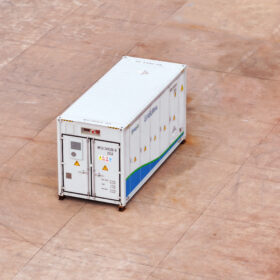
Relyez launches 5 MWh battery for 2-hour energy storage
The battery is intended for two hours of storage in large-scale and C&I applications. It reportedly features a roundtrip efficiency of 88% and a lifespan of 8,000 cycles.
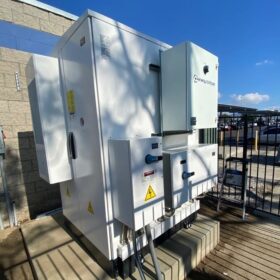
California transportation terminal retrofits energy storage to its solar carports
Energy Toolbase and Stellar Solar implemented an advanced energy management system for the Mira Loma transportation campus.

APsystems unveils home solar and energy storage power control system
The new power control system (PCS) is designed to maximize capacity and storage integration with solar arrays.

The significance of state-of-charge
Everoze Partner Nithin Rajavelu considers the crucial importance of properly measuring and managing battery state-of-charge (SoC) for the efficiency, longevity, and safety of battery energy storage system (BESS) projects, especially in lithium ferro-phosphate (LFP) devices, which are widely used for large-scale storage.
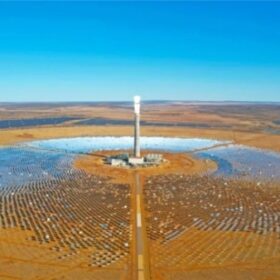
Powerchina switches on 100 MW solar tower in South Africa
Powerchina has switched on a 100 MW solar tower in South Africa. The concentrated solar power (CSP) project will supply 480 GWh of clean energy to the country’s power grid each year. The system’s molten salt storage enables 12 hours of full-load operation.
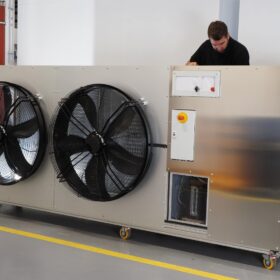
Fraunhofer ISE developing propane heat pumps for multi-family homes
Germany’s Fraunhofer Institute for Solar Energy Systems (Fraunhofer ISE) is developing “easy-to-use and reproducible” propane heat pumps to replace fossil fuel systems in multi-family homes, while exploring modernization options for various residential building types.

PV-based molecular thermal energy storage system achieves 14.9% solar utilization efficiency
An international research term investigated the feasibility of converting solar energy into chemical energy with the design of a hybrid device featuring a solar energy storage and cooling layer integrated with a silicon-based solar cell. Under testing, the device recorded a record energy storage efficiency and decreased the cell’s surface temperature by approximately 8 C under standard solar irradiation conditions.
