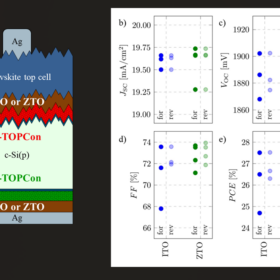
Perovskite–silicon tandem solar cells using zinc-doped tin oxide achieve comparable performance to indium tin oxide counterparts
Fraunhofer ISE-led researchers demonstrated zinc-doped tin oxide (ZTO) as an indium-free alternative to indium tin oxide (ITO) for recombination layers in fully textured perovskite–silicon tandem solar cells. ZTO delivers comparable device efficiencies of 27–28% under current-matching conditions, offering a scalable, indium-free pathway for high-performance tandem photovoltaics without efficiency loss.
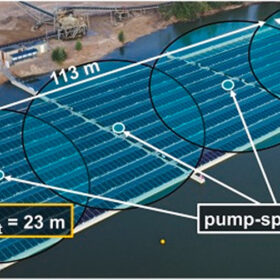
Spray cooling for floating PV
A research team in Germany developed a dynamic model of spray cooling for floating PV systems that couples thermal behavior, electrical performance, and active cooling, and validated it against a 750 kW installation. Simulations across four climates showed that spray cooling reduces module temperatures by up to 42% and improves energy yield by up to 3.8%, with benefits strongly dependent on local conditions.

Thermostatic radiator valves can reduce energy consumption in air-source heat pumps by 6-8%
Researchers in the United Kingdom found that thermostatic radiator valves can reduce air-source heat pump space heating energy use by 6–8% without affecting system efficiency when used correctly. TRVs must be applied carefully in well-designed, balanced systems with at least one open flow path, as they mainly serve as a secondary tool for room-level comfort control rather than a replacement for proper heat pump design and low flow temperature operation.

Pur Energy launches all-in-one battery–based home backup power solution
India-based Pur Energy has launched the PuREPower 3.0 Lite, an all-in-one lithium battery-based power backup solution positioned as a cleaner and more compact alternative to conventional inverter and lead-acid battery combinations for the residential segment.

BMW targets 2028 hydrogen car launch, cites infrastructure and cost hurdles
BMW Group tells pv magazine its iX5 Hydrogen fuel cell electric vehicle (FCEV) will enter series production in 2028 using a third-generation fuel cell system developed with Toyota, but says hydrogen pump prices must reach parity with diesel for the vehicle to succeed commercially.
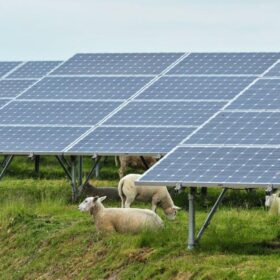
Agrivoltaics maintain or enhance forage quality, study finds
Researchers have analyzed the biomass and nutritional value of grasses and legumes for grazing dairy cattle, growing in agrivoltaics fields. The results showed that forage quality may be maintained or even enhanced in agrivoltaic environments.

Heat pumps may help boost residential solar in France
The government’s electrification plan, presented last week, includes a goal to double heat pump deployment in France by 2030, potentially benefiting the residential photovoltaic sector.
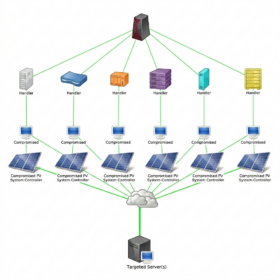
Cyber threats for PV: What are distributed denial-of-service attacks and how do they work
Denial-of-service attacks overwhelm networked systems with massive traffic from compromised devices, disrupting communication and making critical services like PV system monitoring and control unavailable. They can cause operational instability, reduced energy production, and safety risks, requiring layered defenses such as filtering, redundancy, and automated mitigation to maintain system resilience.

Scientists identify new loss factor in tracker-based PV plants on slightly undulating terrain
Researchers in Spain have identified a new source of underperformance in utility-scale PV plants caused by “suboptimal backtracking” on slightly uneven terrain. The study shows that real tracker control systems deviate from ideal flat-terrain assumptions, reducing irradiance capture and causing measurable energy losses compared with simulations.
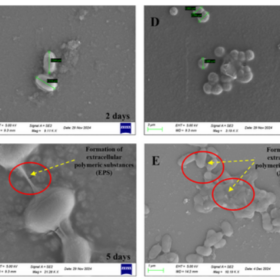
Microbial biofilms can reduce solar module yield by up to 30% in arid zones
A Spanish-Chilean research team has found that microbial biofilms in the Atacama Desert can significantly contribute to the soiling of photovoltaic modules, reducing short-circuit current by up to around 30% under accelerated laboratory conditions. The study highlights microorganisms as active agents in PV soiling and suggests they may influence optical losses, cleaning efficiency, and future mitigation strategies in arid, high-irradiance solar regions.
