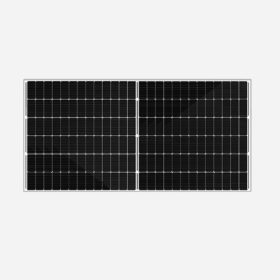
Navitas Solar sets up US manufacturing unit
Indian manufacturer Navitas Solar has collaborated with US-based Sustainable Equity and Colby Solar to set up a module factory with a manufacturing capacity of 1.2 GW per annum.
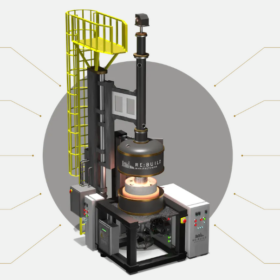
Re:Build Manufacturing introduces solar ingot processor
Massachusetts-based Re:Build Manufacturing has unveiled the RBM600 Solar CZ Puller, a solar ingot processor designed to manufacture high-purity polysilicon ingots for solar panels.

California utility pays $175,000 settlement for false ‘renewable’ advertising
The Southern California Gas Company has agreed to a settlement of $175,000, without admitting fault, to cease claims that their gas is ‘renewable’. The company will also update its website to clarify that only 5% of its gas comes from renewable sources.
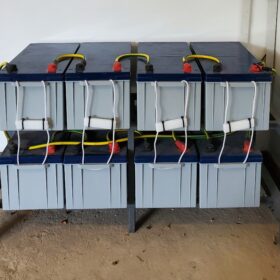
German consumer group debunks residential battery misconceptions
Verbraucherzentrale NRW, a German consumer protection association, has issued a warning about five misleading assumptions about PV-linked residential battery systems.
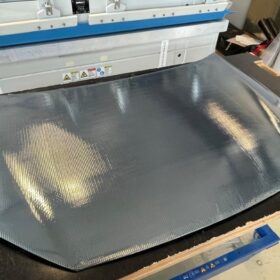
Fraunhofer ISE integrates solar cells into car hood
Germany’s Fraunhofer Institute for Solar Energy (ISE) has advanced vehicle-integrated PV (VIPV) technology by installing solar cells directly onto a standard sheet-metal car hood. The researchers placed a 115 W prototype array on the hood of a Volkswagen with a specialized lamination process.
India’s H1 solar additions hit 3.6 GW
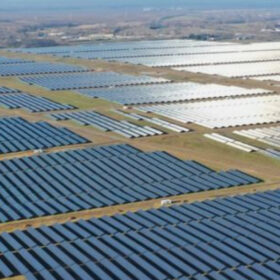
India installed 3.6 GW of solar capacity in the first half of 2023, down 53% year on year, due to project extensions for numerous large-scale initiatives.
Floating PV plant operators may achieve additional revenue through non-evaporated water
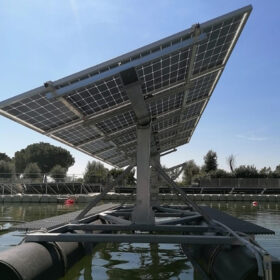
A group of researchers from Italy investigated the economic competitiveness of various ground mounted and floating PV systems with regard to cost and performance, taking into consideration revenues due to reduced water evaporations. They found that the use of non-evaporated water at photovoltaic system sites can achieve revenues greater than $3/kW if used for irrigation and higher than $4/kW if sold to generate hydroelectricity.
Slenergy announces new balcony PV system
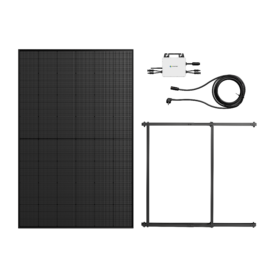
Slenergy, a Chinese electronics manufacturer, has developed a new balcony PV system featuring two 425 W all-black solar panels, an 800 W microinverter, and a mounting structure. It includes a set equipped with a 5-meter AC cable, a 3-meter DC cable, and a 3P connector.

Pexapark records slight increase in European PPA prices for July
Swiss consultancy Pexapark has reported that solar power purchase agreements (PPAs) were the largest technology segment in July by far, with more than 960 MW of capacity in 15 deals, followed by 175 MW of onshore wind capacity under six PPAs.
Perovskite solar cell built on steel substrate achieves record efficiency of 17.1%
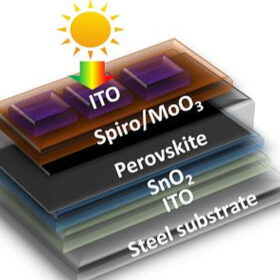
Scientists in Australia claim to have achieved the highest efficiency ever reported to date for a perovskite solar cell built on a steel substrate. They utilized an indium tin oxide (ITO) interlayer between the steel substrate and the cell in order to avoid iron diffusion from the substrate into the PV device.
