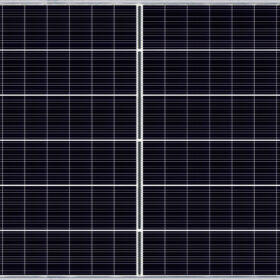
Canadian Solar launches 700 W bifacial TOPCon solar modules
Canadian Solar is offering six versions of its 132-cell TOPBiHiKu7 solar modules, with power outputs ranging from 675 W to 700 W and efficiencies ranging from 21.7% to 22.5%. They have an efficiency range of 26.1% to 27.0%, with a bifacial gain of 20%.
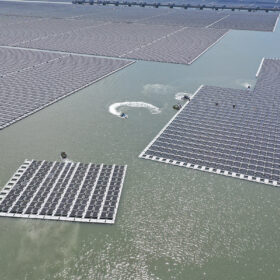
Ciel & Terre hits 1.5 GW floating PV pipeline
French floating PV specialist Ciel & Terre says it now has more than 1.5 GW of floating PV projects in the design phase or under construction. It has already completed 280 floating solar projects in more than 30 countries, totaling 820 MW.
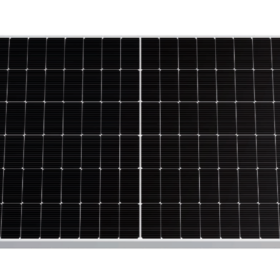
Gautam Solar unveils n-type TOPCon modules at Intersolar Europe
Indian manufacturer Gautam Solar released n-type TOPCon solar modules for the residential, commercial and industrial, and utility-scale PV markets at Intersolar Europe 2023. It is offering the modules in all black, silver frame, glass-to-glass bifacial, and lightweight bifacial variants.
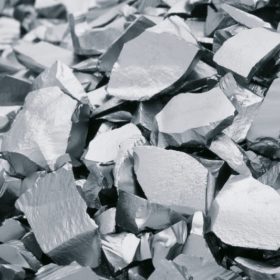
Wacker to expand polysilicon production in Germany
Munich-based Wacker announced it intends to set up a new production line for semiconductor-grade polysilicon at its facility in Burghausen, Germany. The €300 million ($324.4 million) investment would expand the manufacturing capacity of the ultrapure polysilicon by over 50%.
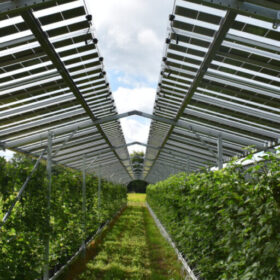
Agrivoltaics for raspberries
BayWa r.e. and its Groenleven subsidiary are building an 8.7 MW agrivoltaics project to support raspberry cultivation, in one the largest projects of its kind in Europe. They expect to complete the project in the first quarter of 2024.
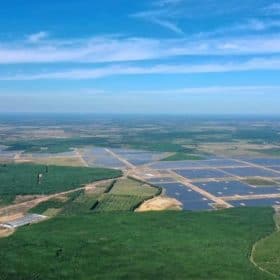
Southeast Asia solar markets set for growth this year
New PV capacity additions in Southeast Asia are expected to bounce back this year for the first time since 2020, according to the Asian Photovoltaic Industry Association. The market is expected to grow by 13% in 2023, for 3.8 GW of new installations.
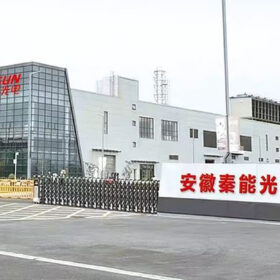
Chinese PV Industry Brief: Q-Sun Solar expands module capacity by 12 GW
Q-Sun Solar says it plans to invest CNY 6.2 billion ($865.6 million) to build 10 GW of solar cell capacity and 12 GW of PV panel capacity.
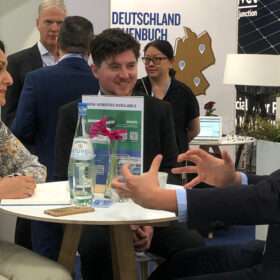
Intersolar 2023: Brand New
pv magazine is on the ground bringing you the latest developments from this year’s three-day European solar shindig in Munich.

Chinese PV executives reportedly detained by police in Munich
German police have detained an executive from a Chinese solar company, the day before the start of the Intersolar Europe trade show this week in Munich, according to Chinese media reports.
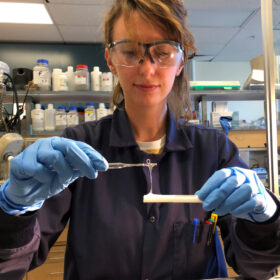
Treatment promises 1000-hour stability for solar perovskites
Scientists in China and Canada have developed an additive that forms covalent bonds with the organic materials in a perovskite solar cell, leading to fewer defects and greatly reduced degradation. Cells treated with the additive maintained 98.6% of their initial performance after 1,000 hours in testing. Xlynx Materials, a company spun out of the University of Victoria in Canada, is making the material available for further commercial trials.
