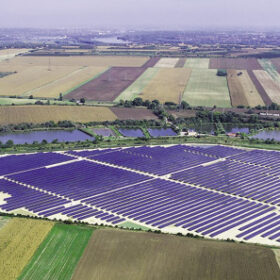
Hungarian solar is on the rise but much needs to be resolved
PV deployment is gathering pace in the EU member state but grid capacity shortfalls and unpredictable shifts in government policy need to be addressed if the nation is to harness its full solar – and European energy security – potential.

Dutch BIPV specialist unveils white facade solar panels
Solarix, a building-integrated PV (BIPV) manufacturer in the Netherlands, has developed a white variant of its facade solar panels. It says demand for white BIPV products is rising across Europe, especially among architects.

Samsung, Oxford launch heat pump pilot project at subsidized prices
Samsung and the city of Oxford in the UK have announced the trial of a neighborhood heat pump scheme in Rose Hill, Oxford. The project aims to connect communities to local installers, helping to remove key barriers to heat pump uptake, including cost. Up to 150 Samsung air-source heat pumps will be installed at a reduced price of GBP 2,600 ($3,185) each.
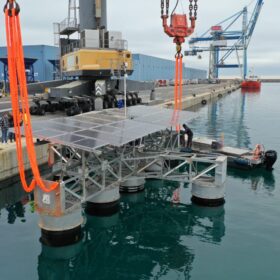
French startup deploys 300 kW offshore solar pilot in Mediterranean
SolarinBlue has deployed the first units of an offshore PV pilot plant in the Mediterranean Sea, 1.5 km off the port of Sète, France.

Poland includes heat pumps in residential solar rebate program
The Polish government says it will launch the fifth round of its Mój Prąd program in April. The scheme will offer rebates for air and ground heat pumps, as well as residential batteries.

Scientists achieve 24.83% efficiency with 2D/3D heterojunction perovskite PV cell
Researchers in China have built a perovskite solar cell with a 2D/3D heterojunction architecture. The device has an open-circuit voltage of 1.19 V, a short-circuit current of 25.21 mA cm−2, and a fill factor of 82.61%.

SEG Solar intends to set up 2 GW of US solar panel production
SEG Solar says it will invest $60 million in a new US factory. It currently produces panels at factories in Vietnam and Indonesia.
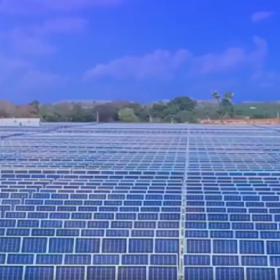
India exempts some solar projects from domestic content requirements
India’s Ministry of New & Renewable Energy (MNRE) has exempted solar projects from domestic content requirements if they are commissioned by March 31, 2024. The move provides developers with the flexibility to source modules at more cost-competitive rates, according to Indian ratings agency ICRA.

Australian startup using second-life Nissan Leaf EV battery packs for storage
Relectrify, an Australian battery technology startup, has secured approval from the International Electrotechnical Commission for its ReVolve energy storage product, which opens the way for it to globally scale up its cell-level control tech.
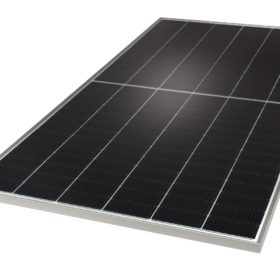
Used, resold PV module prices aligned with general market, says US supplier
EnergyBin has released its annual PV module price index, which shows that module prices have fallen from their 2022 peak – but they are still more expensive than they were in 2020.
