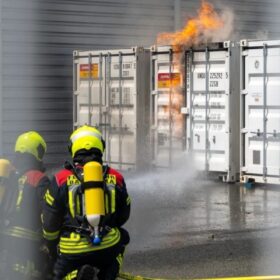
Third battery fire at the same site in Germany
It’s the third time in two months that a battery fire has broken out on the premises of Suncycle in Germany.
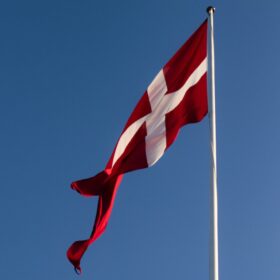
Denmark resumes subsidies for energy tech exports
The Danish authorities have reopened a subsidy pool to promote exports of Danish energy technologies, offering a total of DKK 9.3 million ($1.36 million). Applications for the fund, which targets public-private partnerships, will be accepted until Oct. 11.
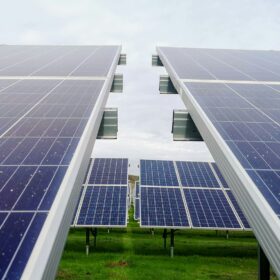
EBRD to finance 120 MW of solar in Tunisia
The European Bank for Reconstruction and Development (EBRD) has approved a €12.5 million ($13.7 million) loan to finance the construction of two 60 MW solar power plants in Tozeur and Sidi Bouzid, Tunisia. The projects, developed by Scatec and Aeolus, will enhance energy security and support Tunisia’s green transition.

World’s highways could host 52.3 billion solar panels, say researchers
Researchers from the Chinese Academy of Sciences, Tsinghua University, Chinese Academy of Geosciences, and Columbia University have concluded that solar-covered highways could meet more than 60% of the world’s annual energy needs.
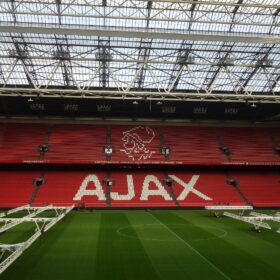
Dutch football stadium installs second battery
Amsterdam’s Johan Cruyff Arena has installed a second battery, increasing its storage capacity to 8.6 MWh and allowing a recent soccer match to be entirely run on sustainable energy.
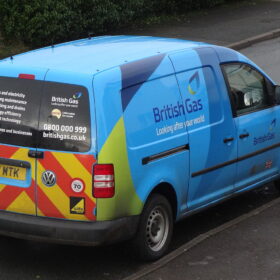
UK installers team up with British Gas for residential solar push
Effective Energy Group and Forster Group have secured exclusive rights to install Hive Solar, a new home solar package connected to the British Gas smart home management brand. It follows the announcement of a heat pump trial with Daikin scheduled for the third quarter of 2024.

Dyness launches new C&I battery
Dyness has developed a new small-scale storage system in 71 kWh, 86 kWh, and 100 kWh variants for commercial and industrial (C&I) applications. The Chinese manufacturer says the product is based on lithium iron phosphate (LFP) cells.
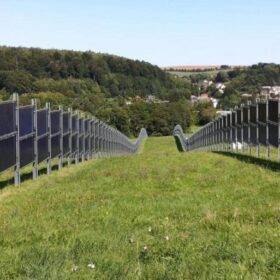
Next2Sun bets on Italy for market expansion
Despite difficulties in France, Next2Sun still sees growth opportunities in Europe, starting with Italy. The German agrivoltaics supplier tells pv magazine that it is also increasingly active in Japan.

Mobile floating PV plant powers Paris Olympic village
A 78 kW floating PV plant powered the Paris Olympic Village. It was transported 900 meters along the Seine River to supply renewable electricity for the athletes village.
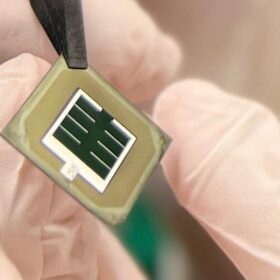
KAUST reveals details of 33.7%-efficient perovskite-silicon tandem solar cell
In a new scientific paper, researchers from the King Abdullah University of Science and Technology (KAUST) in Saudi Arabia presented the 33.7%-efficient perovskite-silicon tandem solar cell announced in May last year. They explained the device is based on a perovskite additive known as tetrahydrotriazinium that reportedly enhances the phase stability of the perovskite film under heat and light conditions.
