
EU approves €1.2 billion renewables grant scheme in Poland
The European Commission has given the green light to a €1.2 billion ($1.3 billion) state aid program in Poland that provides direct grants to companies producing solar panels, batteries, heat pumps, and other renewable equipment components.

Vertical PV comes to India
Yashika Energy Systems has partnered with Germany’s Next2Sun and Wattkraft India to launch pilot projects that integrate vertical bifacial solar technology with agriculture, ranging from 100 kWp to 500 kWp.

Australia has 103 GW of rooftop PV potential, says think tank
A new Climate Council report estimates Australia’s rooftop solar potential at 103 GW – four times the nation’s current installed capacity.
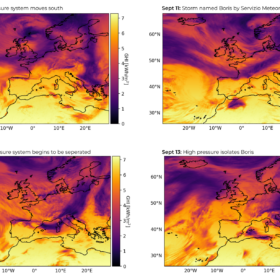
Storm Boris delivers record rain, early snows across Europe
In a new weekly update for pv magazine, Solcast, a DNV company, reports that, as the storm Boris swept across Europe, snow began falling in some regions for the first time this season. The situation is now stabilizing as the system weakens and a high-pressure zone takes hold across the region.

EU-funded project seeks set up pilot production of large-area perovskite PV modules
The EU-funded Laperitivo project aims for 22% efficiency in 900 cm² opaque perovskite modules and 20% efficiency in semi-transparent ones. The project partners include imec, Fraunhofer ISE, TotalEnergies, and EDF.

Chinese solar cell prices stable in a quiet market
In a new weekly update for pv magazine, OPIS, a Dow Jones company, provides a quick look at the main price trends in the global PV industry.
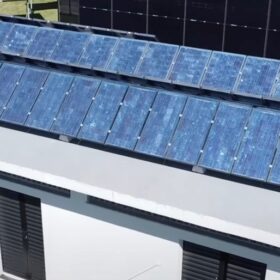
Circular economy and solar photovoltaics: is there a case for second-life PV modules?
What happens to a solar PV module after its expected 25-year operational life? With around 2 TW of rooftop and utility-scale PV already deployed worldwide, and a large number of them being retired before operating for 15 years, the amount of PV modules being discarded is growing every year. As PV modules are becoming cheaper by the day, and with the constant improvement in PV module efficiencies, many utility-scale PV power plants are starting to be repowered even before they reach their expected 25 years of operation. Many of these modules are still performing well. Can they be deployed for a second life to provide solar electricity for a few more years?
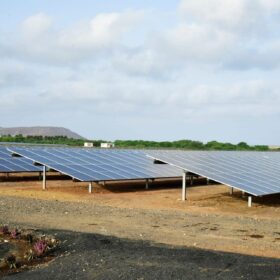
Cape Verde inaugurates largest solar plant
Cape Verde has inaugurated a 5 MW solar array on Sal Island – its largest PV plant to date, according to the Ministry of Energy and Commerce.
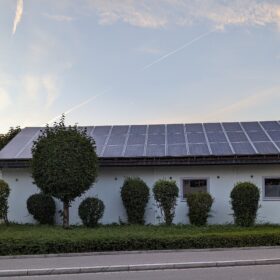
Photovoltaic systems are a no-regret investment decision
New research from Germany shows that investing in residential PV remains an optimal choice even when price breaks on electricity and natural gas are applied. The scientists quantified the savings that PV systems achieved between 2019 and 2022, when the COVID-19 crisis and the outburst of the war in Ukraine made prices in the electricity markets extremely volatile.
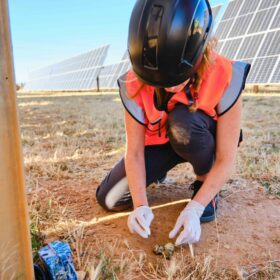
Big solar parks more environmentally-friendly than middle-sized PV facilities
New research from Spain reveals that stricter environmental impact assessments of large scale PV plants contrasts with smaller solar parks, which are not subject to the same degree of restrictions. The review also highlighted the need for more cumulative and synergistic environmental impact assessments.
