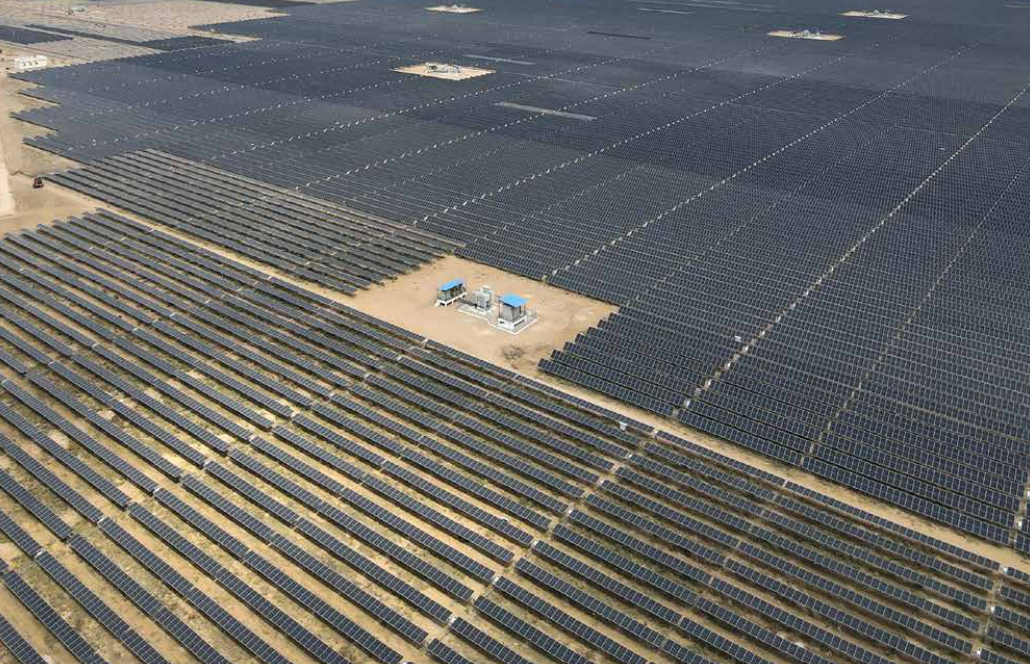





From pv magazine India
India installed 18 GW of solar power in the first five months of 2026 and is on track to add more than 45 GW during the year, according to a new report by SBICAPS.
Rooftop and open-access systems are driving a larger share of growth, accounting for more than 20% of new capacity—significantly higher than in previous years. A cut in the goods and services tax on solar equipment from 12% to 5% is expected to further reduce costs and accelerate adoption among residential, commercial, and industrial users.
On the manufacturing side, solar module capacity under the Approved List of Models and Manufacturers for modules (ALMM-I) has surpassed 100 GW and continues to expand. Producers are competing to develop modules rated above 700 Wp with efficiencies above 23%. SBICAPS said module quality and efficiency will become key differentiators as the market matures.
With self-sufficiency in modules achieved, the government is extending localization rules to solar cells and wafers through new mandates under ALMM-II and ALMM-III. ALMM-II for cells takes effect on June 1, 2026, spurring more manufacturers to integrate upstream. At least seven companies – including Adani, Avaada, Indosol Solar, Premier Energies, Reliance Industries, Vikram Solar, and Waaree – are expected to each install around 10 GW of integrated cell and module capacity by 2028. ALMM-III for wafers is set for implementation from June 1, 2028.
This content is protected by copyright and may not be reused. If you want to cooperate with us and would like to reuse some of our content, please contact: editors@pv-magazine.com.


By submitting this form you agree to pv magazine using your data for the purposes of publishing your comment.
Your personal data will only be disclosed or otherwise transmitted to third parties for the purposes of spam filtering or if this is necessary for technical maintenance of the website. Any other transfer to third parties will not take place unless this is justified on the basis of applicable data protection regulations or if pv magazine is legally obliged to do so.
You may revoke this consent at any time with effect for the future, in which case your personal data will be deleted immediately. Otherwise, your data will be deleted if pv magazine has processed your request or the purpose of data storage is fulfilled.
Further information on data privacy can be found in our Data Protection Policy.