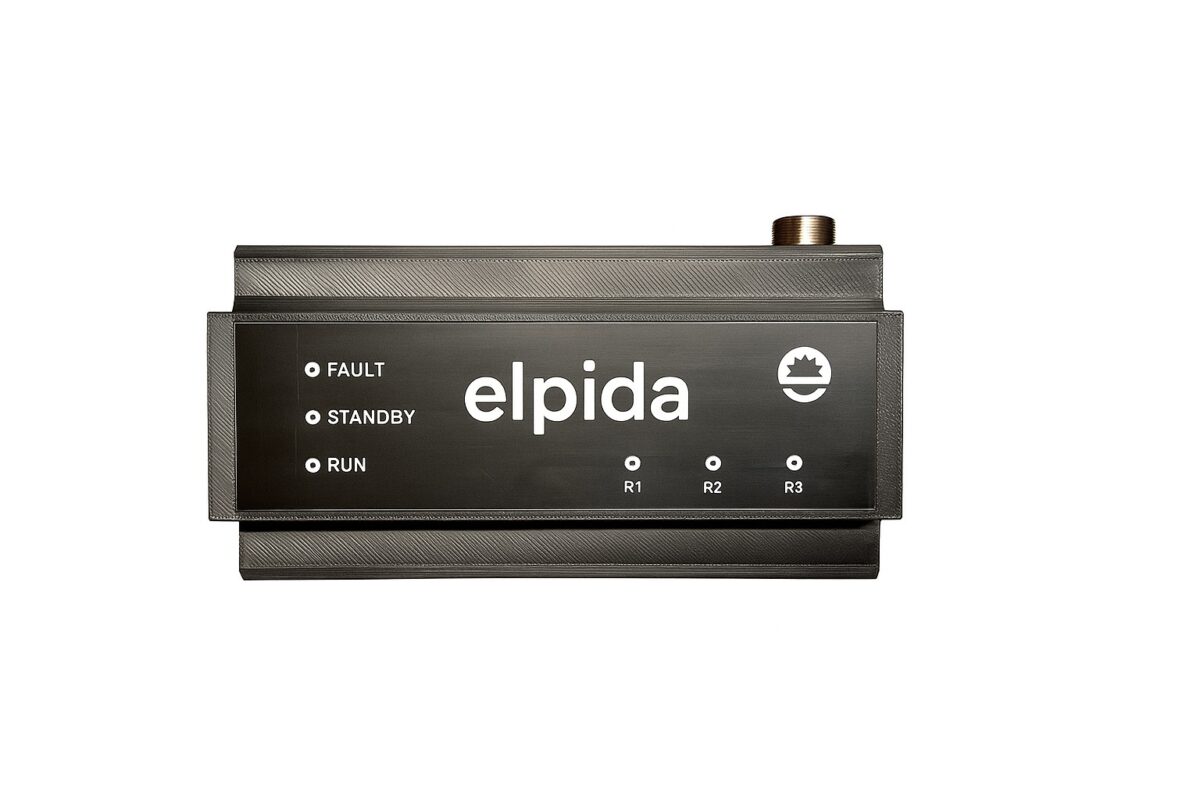





Cyprus-based renewable energy company Enerthon has developed a smart zero-export control device that prevents PV export losses from curtailment while protecting system owners from wasted generation.
Dubbed Elpida, the product is expected to secure certification in the coming months.
“The Elpida devices have been developed to reduce the energy losses of homes and businesses from ripple-controlled curtailment of PV systems in Cyprus,” the company told pv magazine. “It is installed at the PV system site, receives a signal from the distribution system operator, measures the load and dynamically controls the inverter to avoid export of energy.”
Households in Cyprus are expected to lose about €300 ($350) in 2025 because of ripple curtailment, according to the company. In those situations, the distribution system operator sends a ripple signal to inverters, ordering them to limit production to avoid grid overload. However, because self-consumption does not interfere with the grid, the new product allows it by dynamically controlling the inverter.
The device’s supply is 230 Vac to 270 Vac, and it can read three phases between live and neutral (L1-N, L2-N, L3-N). It works with as many as three current transformers and can run internally on 12 Vdc, 5 Vdc or 3.3 Vdc. It communicates with inverters through the RS-485 serial communication standard.
“We are studying other EU countries where curtailment of rooftop systems is leading to significant losses,” the company added. “Our preliminary findings show that in the United Kingdom, Germany, Spain and Portugal, the distribution system operators are implementing zero-injection modes.”
Cyprus curtailed more than half of its potential renewable power in early 2025, including record residential solar cuts, as grid limits and a lack of storage strain its energy transition.
According to CyprusGrid, an energy analytics platform focused on the country’s electricity sector, Cyprus curtailed 145,000 MWh of renewable energy between January and May 2025 – a 58% curtailment rate out of an estimated 251,000 MWh of potential clean generation.
In contrast, Cyprus curtailed 29% of its generated renewable energy in 2024, up from 13.4% in 2023 and 3.3% in 2022.
This content is protected by copyright and may not be reused. If you want to cooperate with us and would like to reuse some of our content, please contact: editors@pv-magazine.com.


By submitting this form you agree to pv magazine using your data for the purposes of publishing your comment.
Your personal data will only be disclosed or otherwise transmitted to third parties for the purposes of spam filtering or if this is necessary for technical maintenance of the website. Any other transfer to third parties will not take place unless this is justified on the basis of applicable data protection regulations or if pv magazine is legally obliged to do so.
You may revoke this consent at any time with effect for the future, in which case your personal data will be deleted immediately. Otherwise, your data will be deleted if pv magazine has processed your request or the purpose of data storage is fulfilled.
Further information on data privacy can be found in our Data Protection Policy.