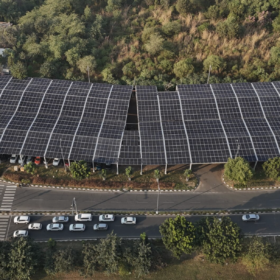
Captive solar gaining ground in India’s industrial manufacturing hubs
Industrial regions in Punjab, Haryana, Maharashtra, Gujarat, and Tamil Nadu are emerging as key markets for captive solar in India. High electricity tariffs, state-level incentives, and environmental targets from export-focused firms are accelerating adoption of distributed solar across the country’s industrial sector.
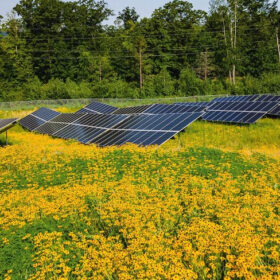
How community solar is impacted by the One Big Beautiful Bill
Despite the upcoming loss of US federal tax credits, community solar developers and investors can prevail if they prioritize states with strong legislation and financial incentives.

New PV system sizing approach based on jellyfish search algorithm
Researchers have used the jellyfish search algorithm to optimize solar PV distributed generation placement and sizing. They have tested the algorithm on an IEEE 33-bus system, with one, two, or three PV deployment scenarios, and compared its performance with that of a dozen of competing optimization techniques.
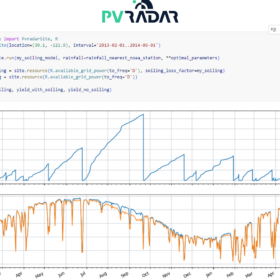
PVRadar launches Python programming tool to ease site-specific loss modeling
German software company PVRadar Labs has released a Python programming package for solar asset owners and engineers that want to build site-specific models.

The Hydrogen Stream: eCap Marine to supply fuel cells for marine vessels
eCap Marine says it will supply 8 MW of hydrogen fuel cell systems for four zero-emission vessels under construction for Norway’s Møre Sjø and logistics firm Samskip, with deliveries expected in 2027.

Canadian developer plans 1 GW solar park in Argentina
Aisa Group is seeking to secure financial incentive to build a massive photovoltaic park in the department of Jáchal, province of San Juan, with an estimated investment of $600 million. The project includes supplying energy to industrial users and the national electricity grid.

France Solar enters liquidation
French solar installer France Solar has entered liquidation after failing to secure a buyer, following its placement in receivership on April 28.

First Solar to use quantum dots to boost module efficiency
Quantum dot technology promises to boost bifacial solar module output. The company entered into a supply agreement with specialist UbiQD.

Netherlands increasing vigilance on solar inverter-related cybersecurity risks
The Dutch government said it remains vigilant on potential cybersecurity threats coming from solar inverters. It minimized, however, the risk of hidden hardware components in inverters and said these devices would be “easily detectable” by the Dutch authorities.

Solar curtailment on the rise in Poland
Curtailment of renewable energy in Poland rose 36% in the first five months of 2025, threatening the financial viability of solar plants as operators face long delays and reduced compensation for lost output.
