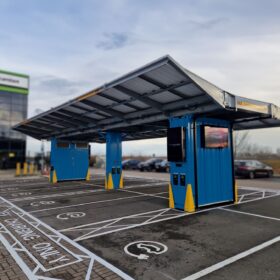
Fast deploy solar canopy EV charger secures UK distribution deal
Solar canopy and EV charging station from 3ti available from Segen in a deal which gives the United Kingdom’s largest PV distributor exclusive rights for six months. The charging station comes with a 20 kW rooftop array and uses an existing grid connection.
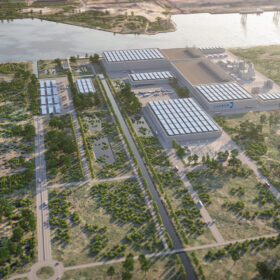
Longi backs Carbon’s shift to GW-scale solar production in France
France-based startup Carbon plans to partner with Chinese manufacturer Longi and adopt back-contact (BC) solar technology as it revises its roadmap for a gigawatt-scale solar module factory.
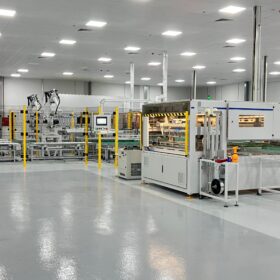
Ecoprogetti ramps up solar module production line in Oman
Italy’s Ecoprogetti has delivered a 400 MW fully automated solar module production line in Oman. The facility is the company’s second in the country, which it says equates to a majority share of Oman’s module manufacturing market.

Key takeaways from France’s Energaia trade show
France’s Energaia trade fair drew record crowds and exhibitors last week, underscoring continued investment appetite in solar and storage, even as developers warn that policy delays and a residential slowdown could weigh on activity after 2025.

France pulls reduced VAT status from four DMEGC solar modules
France’s certification body says it has withdrawn eligibility for a lower solar VAT rate from four Chinese-made modules after finding traceability errors that altered their carbon footprint calculations.

EU security doctrine highlights high-risk dependency on Chinese solar inverters
A document published by the European Commission on strengthening the EU’s economic security lists reliance on Chinese solar inverters as an example of high-risk dependency. It adds the commission plans to address such risks under its cybersecurity framework.

Ford launches battery storage business, repurposing EV manufacturing capacity
The automotive giant will leverage its plants in Kentucky and Michigan, along with its lithium iron phosphate (LFP) technology know-how, to provide solutions for energy infrastructure and the expanding data center market. The company plans to begin shipping battery energy storage systems (BESS) in 2027.
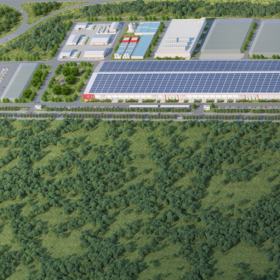
SEG Solar starts building 3 GW solar ingot, wafer factory in Indonesia
U.S-headquartered SEG Solar is constructing a 3 GW ingot and wafer factory in Indonesia. The new production is located at its existing cell manufacturing facility, completing an end-to-end solar manufacturing chain for the company.
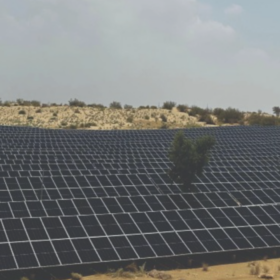
India’s SJVN nears completion of 1 GW utility-scale solar project
India’s Satluj Jal Vidyut Nigam (SJVN) has brought more than 830 MW of a 1 GW solar project in Rajasthan into commercial operation, with full commissioning expected soon.

The impact of laser-assisted firing on TOPCon solar cell performance
UNSW and Jolywood studied the thermal stability of laser-assisted fired TOPCon solar cells during module fabrication and high-temperature stress, identifying hydrogen-related defect dynamics as the key factor behind degradation and recovery. They found lamination causes temporary efficiency losses that self-recover under light exposure, while optimized LAF can restore degraded contacts, providing practical guidance for reliable module manufacturing and testing.
