





Switzerland’s national transmission grid operator Swissgrid has released a white paper covering how the country can integrate its targeted 40 GW of installed PV capacity by 2050, building on the around 9.62 GW deployed by the end of last year.
There are over 300,000 PV systems supplying solar power in Switzerland, most of which are smaller systems on rooftops. While none are currently directly connected to Swissgrid’s transmission grid, the operator says it is crucial future solar expansion in Switzerland is system-friendly, regardless of grid level, to guarantee the safe and reliable operation of the transmission grid at all times.
The white paper, developed in a collaboration with a team of Swiss energy sector experts, says that the integration of up to 40 GW of solar into the Swiss electricity system is “hardly conceivable” under current processes and framework conditions. It adds that only a consistent interplay of regulations, market signals, incentives and processes will enable the targeted integration.
Christof Bucher, Professor of PV Systems at Bern University of Applied Sciences and one of the experts that worked on the paper, told pv magazine the integration of solar power into the grid requires far-reaching reforms to Switzerland's energy system. “It will not be enough simply to develop two or three new market products for balancing energy,” he said. “The entire system needs to be overhauled.”
Among a set of key measures outlined in the paper is the establishment of framework conditions for new technologies and decentralized systems, as well as uniform specifications for PV systems in relation to their behaviour in the event of communication disruptions, grid outages and cybersecurity.
The paper also calls for a reduction in the grid connection capacity of solar plants. It says a grid designed for 100% of installed PV capacity is “neither technically nor economically sensible” and instead suggests connection capacity could be reduced by up to 50% – which Swissgrid calculates would result in around 15% of of energy not being fed into the grid over the year – while allowing the system owner to consume or store energy that is not fed into the grid, replacing existing maximum feed-in priorities.
Bucher said solar power currently enjoys priority feed-in, which distorts the market and leads to certain instabilities, from high volatility to saturation. “The difficulty for the legislator will be to abolish this priority feed-in without jeopardizing economic viability and thus the expansion of PV,” he suggested.
Other proposals in the paper include no further financial incentives for feeding electricity into the grid when prices are negative, a focus on capacity building rather than maximizing annual yield to allow solar to make a significant contribution to supply during colder and winter months, and a mandatory move to flexibility services by integrating storage, flexible consumption and intelligent energy and power management in order to keep PV systems profitable.
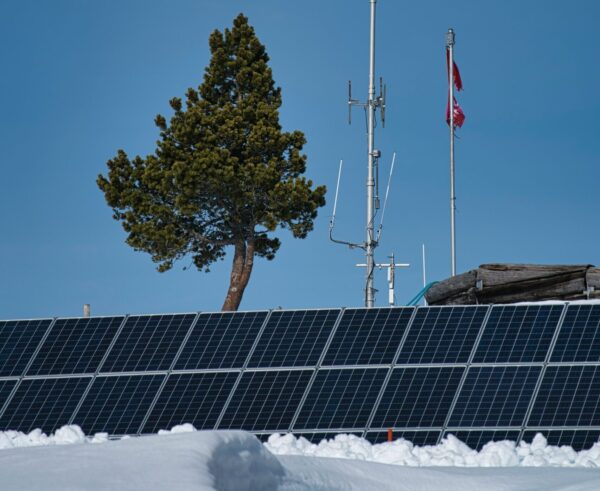
Photo by Sergio Zhukov on Unsplash
Bucher said storage systems will be key to mitigating solar’s effect on the energy system and will be installed on a large-scale in a decentralized maner.
“Once they are built, they can be used flexibly for all sorts of other purposes. I anticipate that many supposed gold mines, such as the balancing energy markets, will fizzle out, because battery storage systems will undercut each other in the markets,” Bucher explained. “But that is fine and, in the long run, will lead back to stable, well-functioning markets with less volatility than we see today.”
Bucher also explained that storage systems will directly influence PV’s production profile, which he said stands at around 15-20% in the energy system today but needs to be closer to 50%.
The report’s white paper adds that it is important to prioritize measures with long-term impacts that are difficult or costly to correct, such as defining standards and requirements for systems.
“Once installed, subsequent modifications to PV systems require costly adjustments/retrofits – including difficult discussions about cost sharing and transition periods,” the paper explains. “Because systems installed today will remain connected to the grid for twenty years or more, no time can be wasted defining the necessary connection conditions and requirements.”
Bucher said work is already underway on almost all the points mentioned in the white paper.
“However, work on topics that are far removed from one another, such as support schemes and balancing energy markets, is rarely coordinated. The white paper aims to act as a coordinating force between these topics,” he explained. “For example, it tells a working group of distribution system operators: ‘What you are doing is excellent and important, but please bear in mind that it has these and these side effects. You must mitigate these.’”
When asked by pv magazine if Switzerland's regulatory environment requires changes in order to incorporate the measures outlined in the paper, Bucher said distribution system operators could already implement many of the necessary measures today, but have no incentive to do so.
“Legislative changes could require them to do so,” he suggested. “I also see a need for change in the balancing energy markets, which are still optimised today for large power stations that are not dependent on the weather. The barriers to market entry for prosumers are too high. However, these changes do not necessarily require regulatory adjustments.”
This content is protected by copyright and may not be reused. If you want to cooperate with us and would like to reuse some of our content, please contact: editors@pv-magazine.com.



By submitting this form you agree to pv magazine using your data for the purposes of publishing your comment.
Your personal data will only be disclosed or otherwise transmitted to third parties for the purposes of spam filtering or if this is necessary for technical maintenance of the website. Any other transfer to third parties will not take place unless this is justified on the basis of applicable data protection regulations or if pv magazine is legally obliged to do so.
You may revoke this consent at any time with effect for the future, in which case your personal data will be deleted immediately. Otherwise, your data will be deleted if pv magazine has processed your request or the purpose of data storage is fulfilled.
Further information on data privacy can be found in our Data Protection Policy.