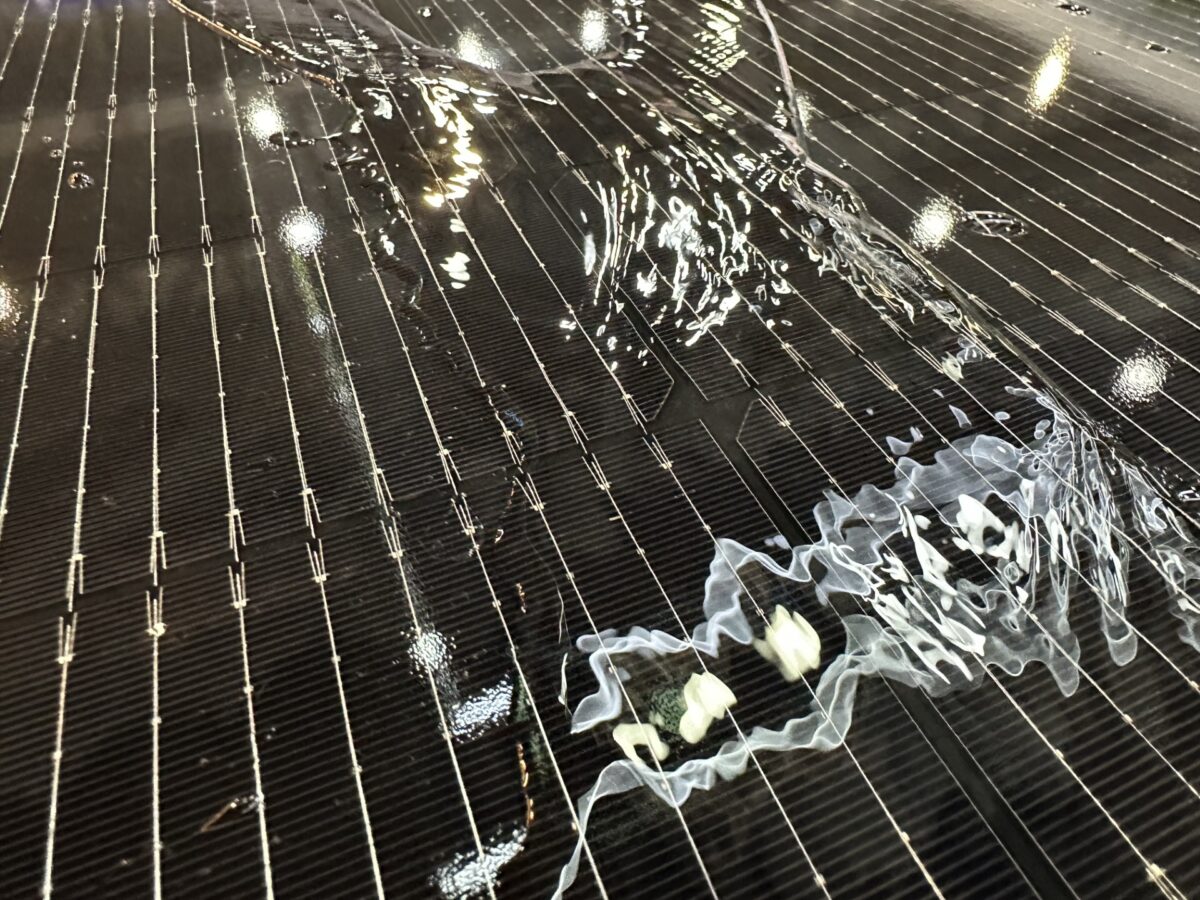





A research team from the Czech Republic has developed a novel Internet of Things (IoT) architecture specifically designed for active water cooling of PV panels active cooling of PV panels.
“The architecture explicitly evaluates the net energy balance of the cooling process,” the team said. “The proposed system enables autonomous operation of individual cooling nodes while providing centralized coordination and trend-aware decision-support capabilities at the fog level. This approach improves overall energy efficiency, reduces dependence on centralized hardware, and establishes a scalable foundation for future integration of AI-based control strategies.”
The distributed IoT-based architecture integrates an autonomous ESP32-based microcontroller, a Raspberry Pi fog layer for real-time decision-making, and an optional cloud layer for long-term optimization.
The system uses a distributed IoT architecture with three layers, namely edge, fog, and cloud. The edge nodes handle data collection, with sensors on the PV panels measuring temperature, electrical output, coolant status, and environmental conditions.
The data is sent via the message queuing telemetry transport MQTT communication protocol to a central controller. In the controller, the fog layer kicks in, performing real-time decision-making and activating a water pump based on thresholds not shared by the team. A cloud layer enables long-term analysis but is not required for operation.
An experimental study of the proposed IoT technology was conducted outdoors on a real 600 W installation at an undisclosed location. In the experiment, two branches of the PV installation were supplied with the novel IoT system, and two were not, acting as a reference. Data was collected across 52 days.
Per the results, on a representative day, the daily energy yield of the cooled branch was 818.61 Wh, while the reference uncooled branch produced 762.36 Wh. That represents an absolute gain of 56.25 Wh and a relative gain of 7.38%. “When accounting for measured pump consumption of 6 W, the resulting energy return on investment (ROI) reached 1.07 on representative days of high-irradiance, confirming a positive net energy balance under real operating conditions,” the team added.
“The proposed architecture is fully wireless, scalable, and independent of centralized hardware constraints,” they concluded. “By explicitly evaluating the net energetic effect of cooling rather than instantaneous peak gains, the study establishes a practically deployable and energetically consistent framework for adaptive PV temperature management under dynamic climatic conditions.
The system was presented in “Energy-aware IoT architecture for active cooling of photovoltaic panels under dynamic weather conditions,” published in Energy Conversion and Management: X. Scientists from the Czech Republic’s University of South Bohemia in České Budějovice and the Czech Academy of Sciences participated in the research.
This content is protected by copyright and may not be reused. If you want to cooperate with us and would like to reuse some of our content, please contact: editors@pv-magazine.com.


By submitting this form you agree to pv magazine using your data for the purposes of publishing your comment.
Your personal data will only be disclosed or otherwise transmitted to third parties for the purposes of spam filtering or if this is necessary for technical maintenance of the website. Any other transfer to third parties will not take place unless this is justified on the basis of applicable data protection regulations or if pv magazine is legally obliged to do so.
You may revoke this consent at any time with effect for the future, in which case your personal data will be deleted immediately. Otherwise, your data will be deleted if pv magazine has processed your request or the purpose of data storage is fulfilled.
Further information on data privacy can be found in our Data Protection Policy.