Ireland’s grid-scale solar breaches 1 GW generation mark

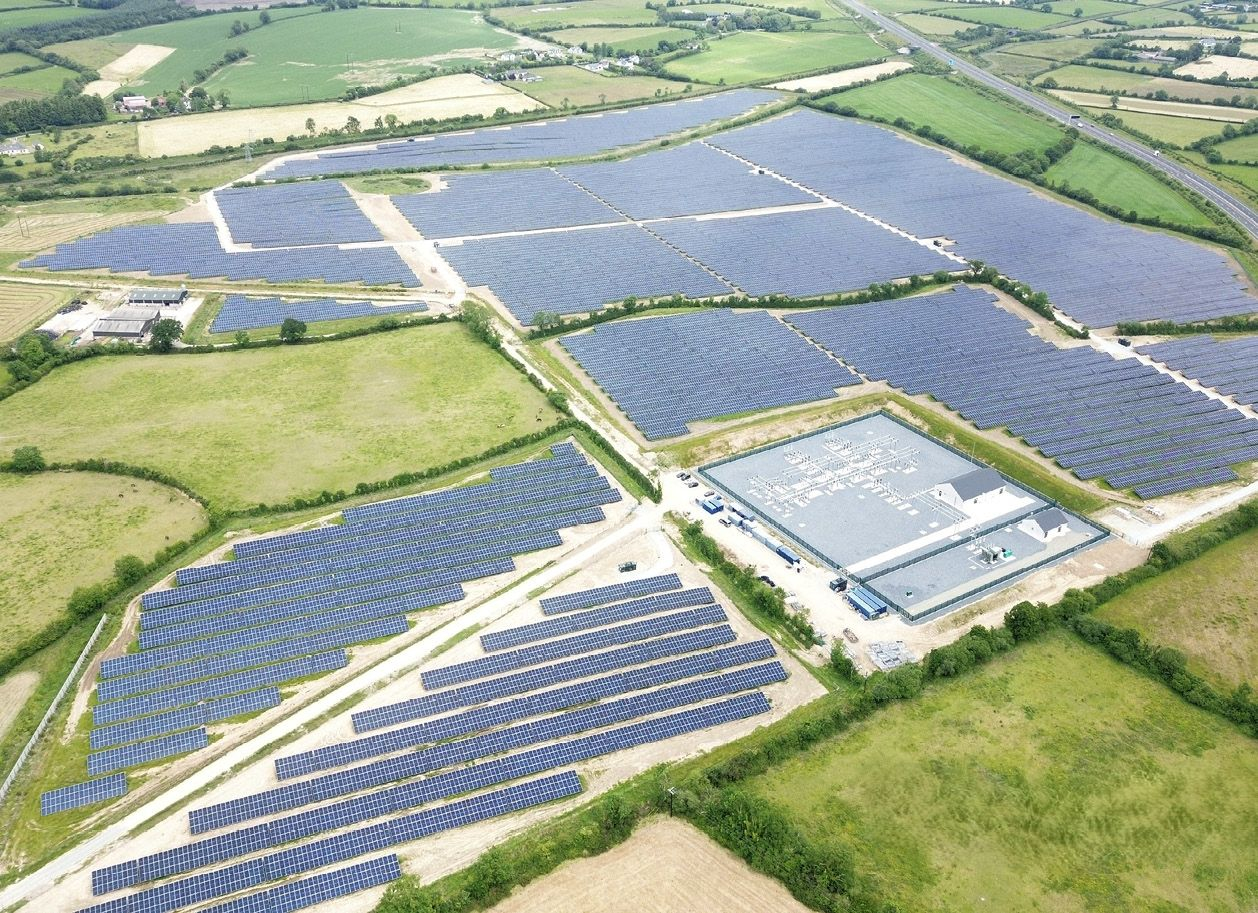
Ireland’s high-voltage transmission system operator Eirgrid attributed the more than 1 GW of electricity generated by solar PV to the increase in grid-scale solar farms connected to the system. The first record generation peak of 1,021 MW was achieved for the first time on Monday, April 20, at 12.19 pm. This was beaten on Friday, April 24, at 12.08 pm with 1,087 MW, and then a day later the peak climbed to 1,133 MW at 2.14 pm.
March and May of 2025, by comparison, saw peaks of just over 750 MW. Ireland has been recording several record generation peaks for grid-scale solar – the most recent peak before the 1 GW was surpassed was reached on March 21. It was 983 MW.
All of the generation data was recorded by Eirgrid’s National Control Centre. The TSO’s CEO Cathal Marley said the ever-increasing generation by large-scale PV shows Ireland is making progress integrating renewable energy and “managing the very complex and technical task of balancing different forms of renewable and conventional generation on the system” to meet national demand.
Despite grid-scale solar’s recent records and the scope for further records to be broken as the summer progresses and more PV farms are connected, onshore wind is still the country’s most prolific renewable power generator.
Metered data from Eirgrid over the course of a year shows the percentage of electricity demand met by grid-scale solar has been increasing very gradually, hitting 3.1% by 2025. This was up from 2023’s average of 1.1% and 2024’s average of 2%.
In February of this year, Solar Ireland told pv magazine that as of December 2025 Ireland’s cumulative installed capacity surpassed 2.3 GW across all PV segments. The country added 1 GW of PV installations in 2025 alone, and Solar Ireland reported a development pipeline of approximately 1.7 GW of grid-scale projects. More recent updates from the lobby group claim Irish installed solar capacity has since reached 2.5 GW.
Grid boosting efforts
The challenge for Ireland is getting these projects connected to the grid in a timely manner. The government has been investing heavily in grid infrastructure to integrate renewables into the electricity system, approving its biggest ever dedicated grids funding package of €1.1 billion ($1.29 billion) in October 2025.
This investment is very much needed. Ireland curtailed almost 89 GWh of solar generation in the first half of 2025, according to a report by Montel Energy. The consultant’s report also warned that solar curtailment increased seven-fold since 2022, with Montel Energy analyst Fintan Devenney telling pv magazine at the time the report was released that the system was “struggling to cope with the rapid increase in solar generation capacity.”
The slow take-off for energy storage additions is a contributing factor, and Ireland is working to add energy storage systems into its energy markets. The utilities regulator, CRU, announced in April that renewable energy projects can now share a grid connection, meaning co-located technologies such as solar and batteries can operate behind a single grid connection. The decision was welcomed by Solar Ireland, whose CEO Ronan Power described it as a way to get more from the existing grid.
“This is a strong first step. It allows us to get more from the grid we already have and supports solar and battery projects working together. The next step is to build on this by enabling full hybrid systems and accelerating delivery, so we can turn this progress into projects on the ground.”
Ireland’s Minister for Climate, Energy and the Environment, Darragh O’Brien said that grid infrastructure and renewable energy integration would be a top priority for its upcoming presidency of the Council of the European Union.
“As Ireland prepares for its EU presidency, we are determined to play a leading role in progressing key European initiatives such as the European Grids Package, helping to build the infrastructure needed to deliver clean, affordable energy for citizens and businesses across Europe,” said O’Brien on April 23 as he signed two agreements at the WindEurope conference in Madrid. The first agreement is a memorandum of understanding between Ireland and Spain to explore the development of an electricity interconnector between the two countries. The second agreement O’Brien signed was an extension of Ireland’s existing agreement with the UK on energy transition.
This content is protected by copyright and may not be reused. If you want to cooperate with us and would like to reuse some of our content, please contact: [email protected].

Please login to comment