Marian Willuhn

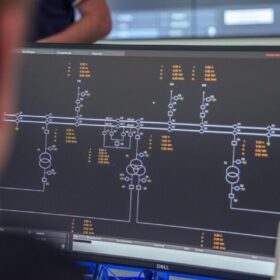
Germany classifies cybersecurity threats for energy infrastructure
Germany’s Federal Network Agency will use a new, structured framework developed by Fraunhofer IOSB-AST to classify cybersecurity incidents in the energy sector. The methodology enables comprehensive risk assessments, from initial reports to systemic and economic impacts, supporting consistent evaluation across the entire energy value chain.
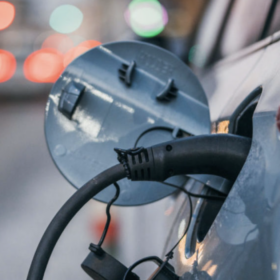
German pilot shows 700 EVs can provide redispatch services
TransnetBW says its pilot with Octopus Energy shows 700 electric vehicles can deliver grid flexibility within existing redispatch processes, with potential to scale to gigawatt-hour levels.
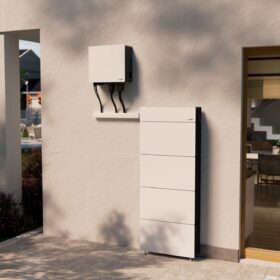
SolarEdge launches Nexis hybrid inverter and high-voltage battery for residential PV
The Nexis solution combines a flexibly configurable hybrid inverter with a modular high-voltage battery offering up to 14 kW charging capacity per stack. The inverter delivers 8–20 kW AC power, supports up to 200% DC oversizing, and features IP65-rated design with integrated backup power.
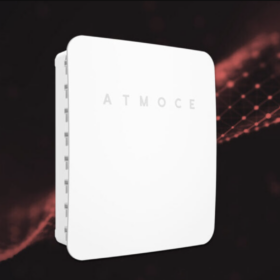
Atmoce launches backup box for three-phase emergency power retrofit
Atmoce has launched a backup box in Germany that adds three-phase emergency power to existing PV systems and works with the company’s M-ELV battery.
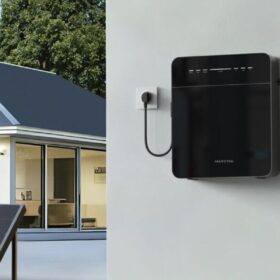
Marstek launches 2 kWh plug-in battery storage system
Marstek has unveiled a plug-in storage system with a two-kilowatt-hour capacity. The device plugs into a standard household socket and is designed to store solar power from balcony systems or draw in cheap electricity from dynamic pricing tariffs.
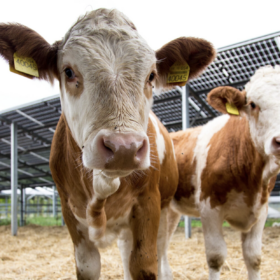
Research shows conventional solar arrays can support livestock grazing
Conventional solar parks can support sheep and cattle grazing because vegetation under and between PV modules provides adequate feed quality, according to a new research report that analyzes five installations in Germany.
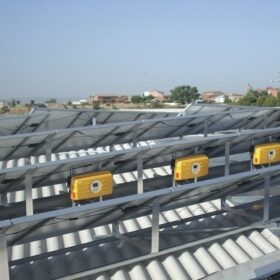
Germany’s Texxecure launches standardized quality rating for PV systems
The Texxecure PV Quality Rating evaluates solar modules, inverters, and entire projects using uniform technical criteria, condensing technical risk into a single AAA-to-D score for developers, investors, banks, and insurers.
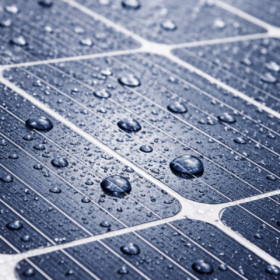
Hybrid perovskite solar cell generates power from sun and rain
Researchers at ICMS in Seville have developed a hybrid perovskite solar cell that generates electricity from both sunlight and raindrops, using the photovoltaic and triboelectric effects. A fluorinated CFₓ polymer layer enables water resistance, triboelectric energy harvesting, and high light transparency without reducing solar cell efficiency.

German startup launches gateway to block inverter kill switches
German startup Solarsecure Tech has introduced a gateway designed to decouple PV inverters from manufacturer clouds and block unauthorized remote control commands.

Fraunhofer IEE calls for ‘grid-forming readiness’ in distribution networks
Germany’s Fraunhofer Institute for Energy Economics and Energy System Technology IEE (Fraunhofer IEE) says in a new position paper that large-scale battery storage systems in medium-voltage grids should be technically prepared for future grid-forming operation, aiming to bridge the gap between current regulations and potential system stability requirements.
