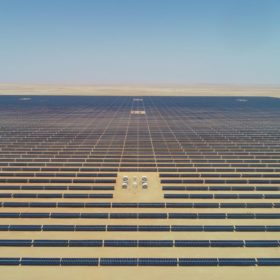
Sterling and Wilson commissions 25 MW solar project in Oman
The Indian multinational said the project is its second PV installation in Oman, following the completion of a 125 MWp solar plant in June.

Indian coal miner plans 300 MW floating PV project
Singareni Collieries, an Indian state-run coal miner, plans to set up a 300 MW floating PV plant on a reservoir in the Indian state of Telangana.
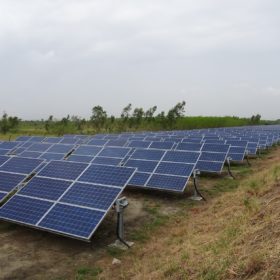
Indian utility launches call for 500 MW of PV
GUVNL, an electric utility in the Indian state of Gujarat, is seeking project proposals through competitive bidding, followed by a reverse auction. Bidding closes on Feb. 23.

Wind-solar-storage hybrid offers cheaper electricity than new coal in India
A new report establishes the feasibility of wind-solar-storage hybrid projects over new coal plants in the Indian states with high renewable energy potential. Tamil Nadu was chosen for the technical and commercial assessment.

The Indian market for off-grid solar refrigeration
Standalone solar-powered refrigerators present a $20 billion opportunity in India for vaccine storage, milk chillers, households, micro enterprises, and cold storage for farm produce, according to a new report by Gogla.
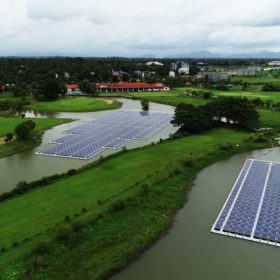
Floating solar plant online at Indian airport
The 452 kWp array features 1,300 photovoltaic panels across an acre of water split between two artificial lakes at the airport golf course.
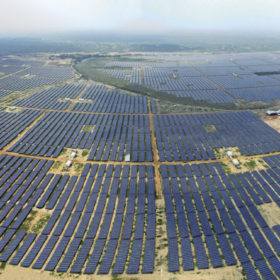
Total to acquire 20% stake in Adani Green Energy
French oil and gas giant Total already owns a stake in developer Adani Green Energy’s 2.3 GW of operational solar assets in India through a joint venture.

The case for floating PV on hydroelectric facilities
A study has analyzed the technical and financial feasibility of floating solar at hydro power plants. The report concludes floating PV reduces evaporation from hydropower reservoirs and the water saved can be used to generate more electricity.

India launches tender for deployment of 317,975 solar pumps
The tender was launched by Energy Efficiency Services Limited (EESL), an energy service company owned by the government of India.

NTPC launches 190 MW solar tender in India
Solar developers have until Feb. 10 to bid for the capacity, which will be awarded through international competitive bidding, followed by a reverse auction.
