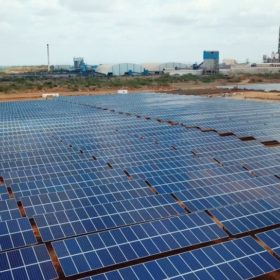
Indian launches 10 MW solar tender in Rajasthan
The tariff ceiling has been fixed at INR3.20/kWh ($0.04) and the ground-mounted PV projects will be set up on a build-own-operate basis. The last day to submit bids is July 24.
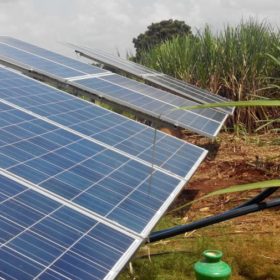
India set for 10 GW of agricultural solar
The Indian state of Andhra Pradesh – which had commissioned an aggregate 3.53 GW of solar capacity as of May 31 – will set up the new plants to ensure nine hours of daily free power supply to the agricultural sector.
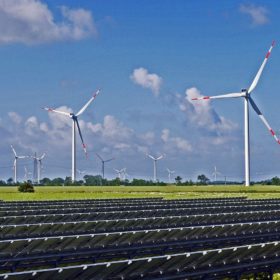
India set to add 15 GW of wind-solar hybrid capacity in five years
Almost 10 GW of hybrid generation capacity is already under implementation despite the nation having only 100 MW of combined wind and PV projects at present, according to analyst Crisil.
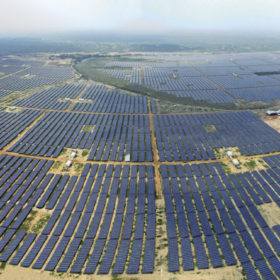
Indian developer wins world’s largest solar award
Adani Green Energy is reported to have exercised an option to double the 4 GW of solar generation capacity and 1 GW of cell and module production facilities it secured in a manufacturing-linked solar tender carried out by the Solar Energy Corporation of India in November.

Indian Railways plans 3 GW of solar capacity
The projects – to be developed in three phases of 1 GW each – will be completed by the end of 2023. While the first and third phases will be developed under public-private partnerships, the second phase will be built under India’s Central Public Sector Undertaking Scheme.

Covid-19 delayed 63% of India’s planned big solar in first quarter
Coronavirus-related disruption severely impacted solar installation during the first three months of the year, as the nation added only 689 MW of utility scale PV, against the 1,864 MW that was scheduled to be commissioned.
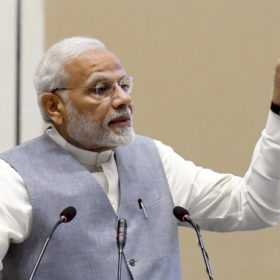
Narendra Modi calls for a rooftop-solar-powered city in every Indian state
The prime minister again emphasized the need for India to develop its own solar manufacturing industry and also urged officials to get on with plans to make the region of Ladakh carbon-neutral.

Innovation promises cheaper solar cell glass manufacturing
Scientists have developed a hybrid production method combining metal mesh and a metal-oxide layer over a glass substrate which they say brings down production cost by 80% compared to the tin-doped, indium oxide-based technology currently in use.

Indian developer wants to walk away from record low solar price
Acme Solar made headlines in 2018 when its offer to accept $0.0322354 per kilowatt-hour generated at a 600 MW solar farm planned in Rajasthan secured the project from federal body the Solar Energy Corporation of India. Now the developer wants to rip up the agreement, blaming Covid-19-related hold-ups.

Solar tariffs of less than $0.034 not financially viable in India
Solar developers in India must consider a range of risks to secure reasonable returns on solar projects, according to research by the Institute for Energy Economics and Financial Analysis and JMK Research & Analytics.
