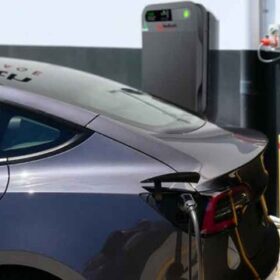
RedEarth unveils V2G EV charger
Australian energy storage manufacturer RedEarth Energy Storage is set to bring its Australian-made vehicle-to-grid electric vehicle charge to market, and has also released two next generation products from its smart energy ecosystem.

Mercedes unveils car with 20% efficient ultra-thin solar coating
Mercedes-Benz unveiled its first car prototype with a silicon-free, 20%-efficient nanoparticle solar coating that powers the vehicle even when off and uses modules thinner than a human hair.
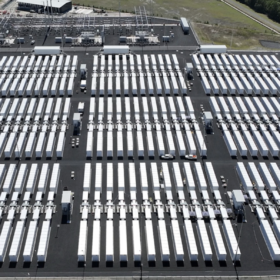
Australia becomes world’s third-largest utility battery market
Australia has overtaken the United Kingdom to rank behind China and the United States in utility-scale battery capacity, with 14 GW/37 GWh of projects at or nearing financial close.

Supermarket EV chargers in Berlin could improve efficiency by over 250%
German researchers say shared-use and digital brokerage models could lift utilization and profitability of supermarket EV charging stations by up to 255%.

New tech can tell if your EV will make it home
Researchers in California have created a new diagnostic metric that can reportedly predict if a battery can successfully power a specific task. The proposed model could be used in electric vehicles, unmanned aerial systems, and grid storage applications.

French startup launches solar-based EV charging optimization system
DejaBlue has developed a plug-and-play energy management system that boosts self-consumption and cuts costs for PV-powered EV charging sites.
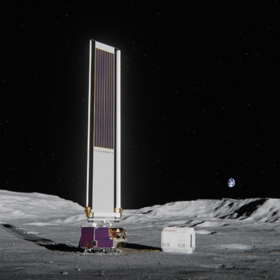
Astrobotic, Honda developing vertical solar, storage solution for lunar missions
Pittsburgh-based aerospace company Astrobotic and Honda’s North American subsidiary are working on integrating Astrobotic’s vertical solar array technology with Honda’s regenerative fuel cell system to develop a power and storage solution capable of supporting prolonged exploration of the moon.
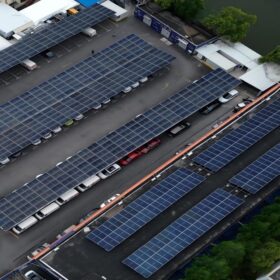
Optimization strategy for PV-powered EV charging stations relying on V2G
Scientists in China have created an optimization technique for an electric vehicle charging station that uses PV, battery storage, and a vehicle-to-grid operation. Considering the uncertainty of PV generation and the randomness of EV load, the system uses two-level optimization, day-ahead and intra-day.
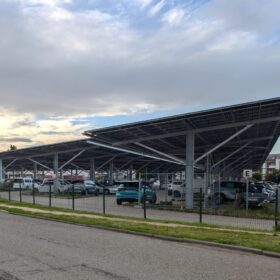
Stochastic optimization for PV-powered EV charging stations
Scientists have developed a new optimization approach that combines both day-ahead optimization and real-time optimization to improve operations of PV-driven EV charging stations. The framework is based on the autoregressive moving average and the Latin hypercube sampling models.

Dow releases new silicone gel for high voltage PV
The company said that its Dowsil EG-4175 Silicone Gel resists temperatures of up to 180 C in next-generation IGBT modules used in inverters.
