
Voltfang opens second-life battery plant in Germany, billed as Europe’s largest
Voltfang has opened what it claims is Europe’s largest second-life battery storage plant in western Germany, with 250 MWh of annual capacity expected in 2026 and a target of 1 GWh before 2031.
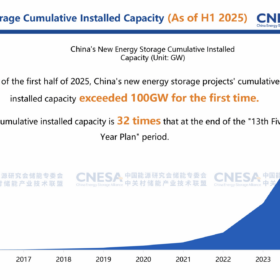
China new energy storage tops 100 GW as lithium overtakes pumped hydro
China’s new energy storage capacity exceeded 100 GW by June 2025, with total installations reaching 164.3 GW, surpassing pumped hydro additions amid accelerating deployments and changing market dynamics, according to the China Energy Storage Alliance (CNESA).
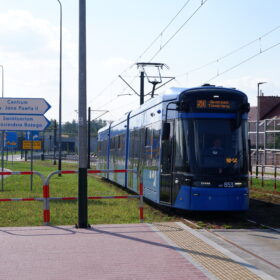
Feasibility assessment for deploying PV panels on tram tracks
New research from Poland has suggested installing 891 PV panels along the entire tram platform and inter-track spaces of four major transportation hubs. The analysis showed that the PV system could power all of the city’s tram stops, the passenger information system, and meet 10% of demand from service depots.

Turbulent times for US energy storage
US President Donald Trump signed the One Big Beautiful Bill Act (OBBBA) on July 4, striking down key Inflation Reduction Act measures for energy storage and leaving the sector bracing for turbulence.
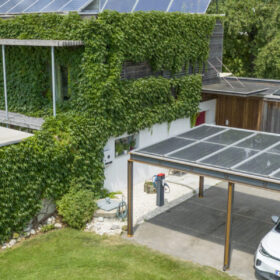
Austria allocates €12 million for solar-plus-storage rebates
The Austrian government had budgeted €12 million ($14 million) for a second funding round but wants to finance successful applications and bring 220 MW new solar and 200 MWh of storage online.

German researchers develop recycling for dry-processed Li-ion batteries
Researchers at the University of Münster have developed a mechanical recycling process for production scrap from the dry processing of lithium-ion batteries. The method operates without solvents, preserves material properties, and allows the recycled cathode powder to be directly reused in electrode manufacturing.
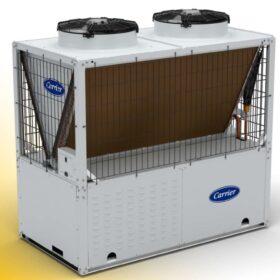
Carrier launches new air-to-water heat pumps for commercial applications
Carrier, a US-based heating solutions provider, said its new AquaSnap 30RQM heat pump system can deliver a water temperature of up to 60 C. The modular system features a heating capacity of 70 kW to 1,125 kW and a cooling capacity of 77 kW to 1,237 kW. T
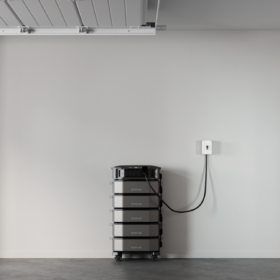
EcoFlow launches stackable battery system in Australia
US manufacturer EcoFlow has introduced a 6 kWh residential battery and backup system in the Australian market, expandable to 30 kWh.

China Electric Equipment Group awards 7.2 GWh of storage cells in tender
China Electric Equipment Group awarded nearly all 7,248 MWh in its 2025 energy storage cell tender to 314 Ah products, with winners including Cornex and Trina Storage.
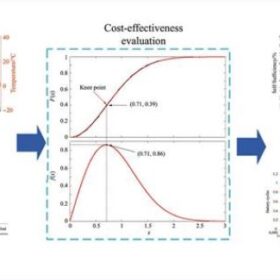
How to store PV power with hybridization of lithium-ion batteries, supercapacitors
Researchers in Denmark have developed a new sizing strategy to combine PV system operation with lithium-ion batteries and supercapacitors. The proposed approach is claimed to reduce annual battery cycle by 13%.
