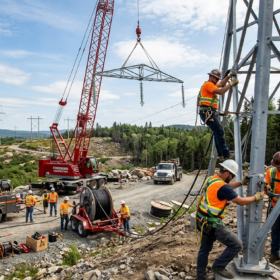
European power grid investment set to rise sharply by 2027
The EU Agency for the Cooperation of Energy Regulators (ACER) says distribution grid investment has risen 51% since 2021, but warns that fragmented planning rules and regulatory distortions could limit efficiency and slow the energy transition.

Cyber threats for PV: What are credential compromise attacks and how do they work
Credential compromise attacks allow adversaries to gain unauthorized access to PV systems by stealing or guessing valid login credentials, enabling them to manipulate operations, disrupt monitoring, or take control of critical assets. These attacks can lead to operational instability, reduced energy production, and safety risks, making strong authentication and access control essential for system resilience.
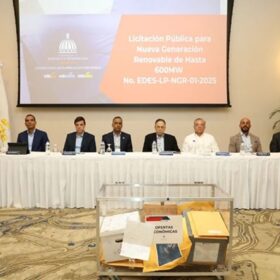
Dominican Republic opens bids for 600 MW renewables tender
The nation’s latest call for long-term power purchase agreements focuses on supplying the national grid with wind and solar projects, specifically mandating integrated battery storage systems to ensure grid resilience.
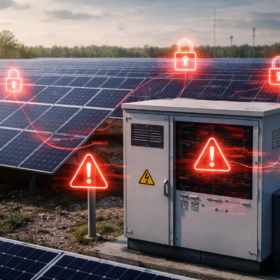
Managing cyber risks in the era of decentralized energy
The move toward decentralized energy resources offers resilience and flexibility in power generation, but it also introduces new complexities that demand proactive security measures.
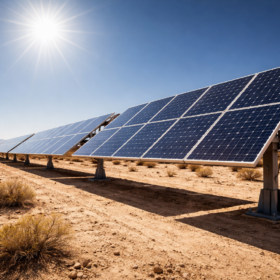
St. Kitts and Nevis tenders major solar-storage project
The electric utility of St. Kitts is launching a tender for a 50 MW solar plus 30.5 MWh battery storage project on the island. Interested developers are asked to register on the utility’s bidding portal to receive the request for proposals document.

Fortescue fast-tracks delivery of ‘world first’ off-grid project combining solar, wind, up to 5 GWh of BESS
The rollout is accelerated to eliminate the use of diesel from iron ore mining and processing.
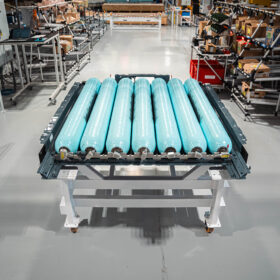
The Hydrogen Stream: BMW unveils tank for iX5 Hydrogen
BMW says its new hydrogen tank enables longer range and flexible production, while South Korea has revealed plans to develop large-scale liquid hydrogen storage systems.

Solar PV, geothermal hybrid systems are more than niche solutions
Solar energy, driven by excellent resource conditions and rapidly improving economic attractiveness, is expected to emerge as a bulk energy supplier in future energy systems. The self-limiting effects of solar power can be circumvented through solar-hybrid solutions, such as PV-geothermal hybrid configurations.

Brazil approves first co-located solar and battery project
Brazil’s National Electric Energy Agency (Aneel) has authorized a 5 MWh battery system co-located with a solar plant, setting a regulatory precedent for integrated storage.

Utility-scale sodium-ion arrives in Romania
Renalfa Power Clusters plans to combine newly acquired solar and battery assets in Romania into a hybrid project using lithium-ion and sodium-ion storage.
