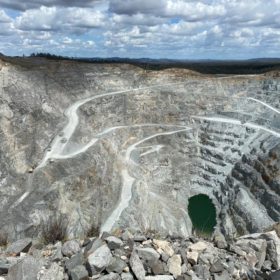
Australian state expedites development of pumped hydro project at gold mine
A plan to build a 2 GW/20 GWh pumped hydro project at an old gold mine in the Australian state of Queensland has been declared a “coordinated project,” in order to fast-track the plan.
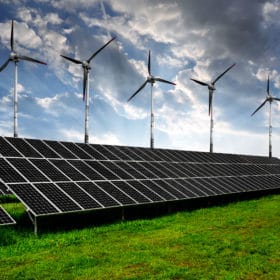
Wind, solar payback times under a year in some parts of world, says Rystad
Record energy prices, particularly in Europe, are driving demand for renewables and energy storage. That is changing the equation for utility solar and wind investment and shortening project payback times to under a year in some regions. Storage deployment, driven by recent policy developments around the world, is also expected to get a big boost through to 2030.

Sodium-ion battery anode made from toxic hogweed
Russian researchers have transmuted poisonous Sosnowsky’s hogweed into high-grade anode material for sodium-ion batteries. The obtained material has a Coulombic efficiency of 87%, which is on par with the best reported results for hard carbons synthesized from other raw materials.
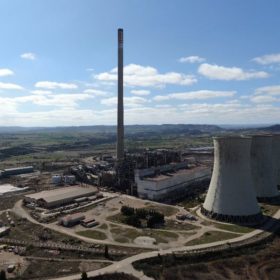
Endesa secures node to deploy 953 MW of solar-wind-storage in Spanish tender
Endesa’s proposal for its Andorra energy hub in Spain is based on the hybridization of renewable technologies, storage and green hydrogen for the decarbonization of local companies.
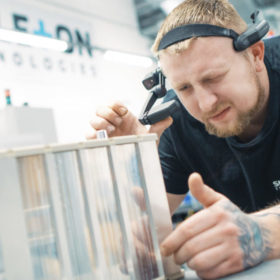
Shell becomes bulk buyer of Skeleton’s SuperBattery
Shell says it wants to use Skeleton Technologies’ SuperBattery storage system in its mining division to electrify and decarbonize its off-road vehicle fleet. The fast-charging batteries are based on a patented curved graphene material.

Subsea cable to bring wind, solar power from Egypt to Europe
Copelouzos Group plans to lay a submarine cable to link 9.5 GW of wind and solar power in Egypt to Greece’s Attica region. The project was recently included in the Entso-E 10-year development plan.

Ontario confirms 1.5 GW-plus tender for battery storage
The Canadian province of Ontario will include a big slice of energy storage capacity as it plans its near-term grid requirements.
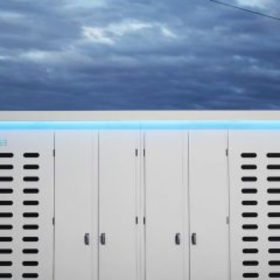
GM moves into energy storage to compete with Tesla
GM’S new GM Energy unit will produce a range of energy systems with Ultium products for the home and commercial markets, as well as Ultium Charge, a public charging service.
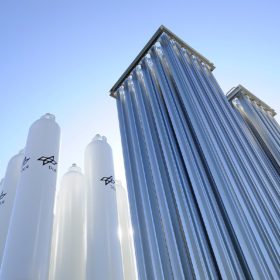
The Hydrogen Stream: Hy24 closes world’s largest clean hydrogen infrastructure fund
The Clean H2 Infra Fund has closed with new investors to mobilize up to €20 billion ($19.4 billion) of investment capacity over the next six years for heavy mobility and energy-intensive industries. Toshiba has revealed new production tech for electrolysis electrodes that slashes iridium use, while Hyundai Heavy Industries has kicked off a demo project for fuel cell vessels.
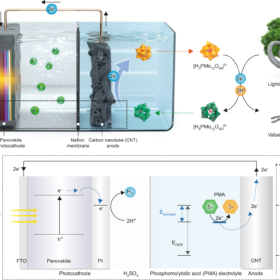
The Hydrogen Stream: South Korean scientists achieve photocurrent density of 19.8 mA cm−2 in PEC cell for water splitting
Ulsan National Institute of Science and Technology researchers have unveiled designs for advanced solar hydrogen production systems to broaden the application of LC biomass. Mitsubishi has started building the world’s first validation center for hydrogen-related technologies, while Fortescue Future Industries has announced investments in Germany and Australia.
