
Chad starts first utility-scale solar plant with 50 MW and storage
Abu Dhabi-based Global South Utilities has commissioned Chad’s first utility-scale solar plant, a 50 MW facility in N’Djamena with 5 MWh of storage to supply 274,000 homes.

Permit secured for 270 MW solar-plus-storage project in Serbia
Türkiye’s Fortis Energy has secured a construction permit for 270 MW of solar alongside 72 MWh of battery energy storage to be built in northwestern Serbia. Construction is scheduled to begin during the second quarter of next year.
European electricity spot market shifts to 15-minute trading blocks
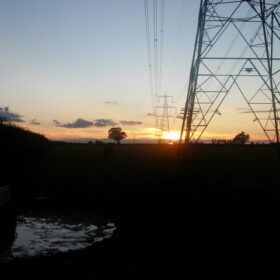
The European Power Exchange (Epex Spot) will switch its day-ahead market from hourly to 15-minute intervals on Sept. 30, a change mandated by the European Union that is expected to improve solar and wind integration, boost battery trading opportunities, and support dynamic tariffs.
How to deliver large-scale grid infrastructure projects
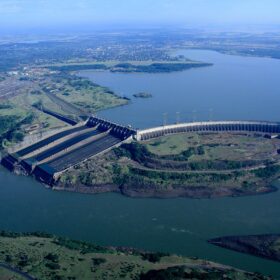
New report from the Utilities for Net Zero Alliance addresses key challenges facing large-scale infrastructure projects and offers stakeholders recommendations for ensuring such projects are delivered within time and budget.

Alibaba, Tencent and ByteDance bet on batteries as AI fuels power demand surge
Tech giants Alibaba, Tencent, and ByteDance are ramping up investments in renewable energy and storage to meet the soaring electricity demands driven by AI.
California enables flexible interconnection for solar and storage
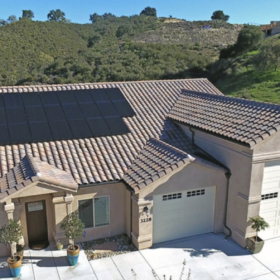
California has introduced a flexible interconnection option allowing distributed solar and storage projects to connect without waiting for costly grid upgrades, though the required control hardware is not yet widely available.

Brazil tenders 50 MW of battery, solar and hybrid sites for isolated areas
Two lots were tendered, to serve communities in Amazonas and Pará, with BRL 312 million ($58 million) of equipment. In Amazonas, 20,165 MW will be installed via five solar and diesel-fired thermal generation sites. Pará will get a 30.1 MW battery, solar and diesel facility.

Australia registers first eight-hour duration grid battery
Australia has commissioned its first eight-hour-duration battery energy storage system, marking a key milestone in the nation’s transition to renewable energy.
U.S. startup unveils zinc-polyiodid redox flow battery with energy density of 320 Wh/L
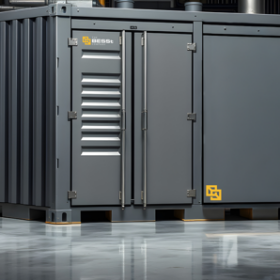
BESSt announced that its new redox flow battery technology delivers 20 times the energy density of conventional vanadium flow storage systems. The battery is based on a zinc–polyiodide redox flow chemistry developed by the Pacific Northwest National Laboratory.

The Hydrogen Stream: Japanese researchers develop green rust catalyst
Japanese researchers have developed a green rust–based catalyst for sodium borohydride, while South Korean scientists have created a framework to assess liquid hydrogen storage tanks for unmanned aerial vehicles (UAV).
