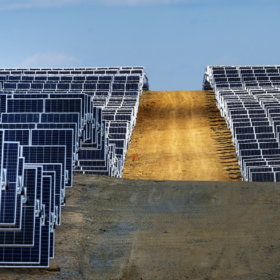
Colombia’s largest PV plant comes online
The 61 MW solar facility is owned by Colombian oil company Ecopetrol.
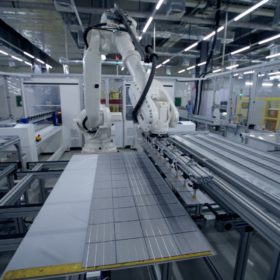
Four winning bidders in India’s gigawatt-scale solar manufacturing tender
Jindal India Solar Energy, Shirdi Sai Electricals, Reliance New Energy Solar, and Adani Infrastructure will each have half of their planned 4 GW annual production of polysilicon-to-module output subsidized by public funds.
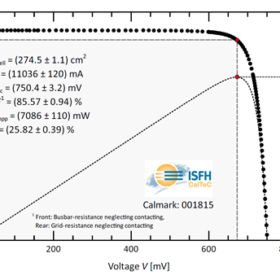
Longi achieves 25.82% efficiency for heterojunction solar cell
The result, confirmed by Germany’s Institute for Solar Energy Research Hamelin (ISFH), was achieved on a heterojunction solar cell based on an M6 wafer.
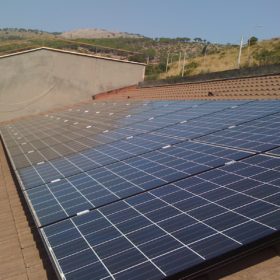
Italy reaches 252 MW/405 MWh of distributed energy storage capacity
The country added 60MW/106 MWh in the first half of the year. Energy storage continues to grow with the region of Lombardy and Veneto being the two largest contributors.
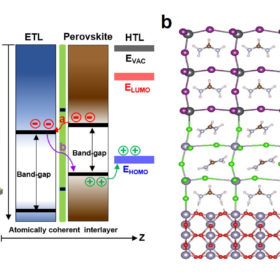
Korean researchers achieve 25.8% efficiency for single junction perovskite solar cell
The record efficiency was obtained thanks to an interlayer placed between the electron-transporting layer and the perovskite layer, which eliminated the need for passivation. The cell was also able to retain around 90% of its initial efficiency after 500 hours under standard illumination.
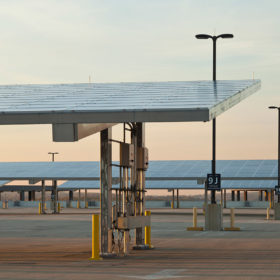
Highway-side solar could produce 36 TWh annually
A collaboration between universities, nonprofits, and a geospatial mapper led to development of a highway solar evaluation tool.
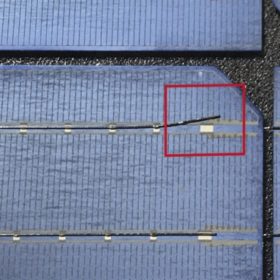
The weekend read: Hidden PV module traps
Frédéric Dross of STS shares the minor yet essential details that buyers must pay close attention to when finalizing PV module purchase agreements, based on the company’s experience advising clients across the globe. Avoiding hidden traps in purchase agreements comes down to detailed contractual knowledge, fine print, and understanding common practices to bypass strict controls.
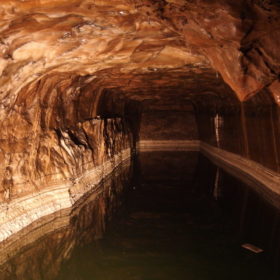
The burgeoning underground scene of hydrogen storage
Underground hydrogen storage seems to be coming up a lot lately, and with the burgeoning hydrogen industry needing somewhere to store itself, it’s not hard to understand why. One of the countries with the best credentials for the future hydrogen economy is Australia. A newly published report has quantified the country’s “massive opportunity” for underground hydrogen storage.
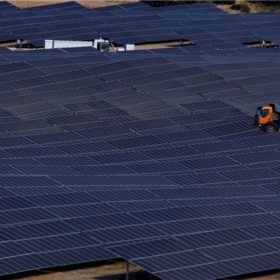
Spain’s renewables auction: Problem or opportunity?
Participating companies and industry experts from Spain’s most recent renewable energy auction, including APPA, Anpier, and Fundación Renovables, share their thoughts with pv magazine on the results published this week, and what could be done better in future tenders.

DNV puts different module formats to the test
Energy consultancy DNV was tasked by module manufacturing giant Longi Solar with comparing the balance of systems costs between modules utilizing 182mm and 210mm wafers, based on a 3.7 MW project in three different layouts. The results reveal a slim cost advantage for the smaller of the two, based on both fixed tilt and tracker systems.
