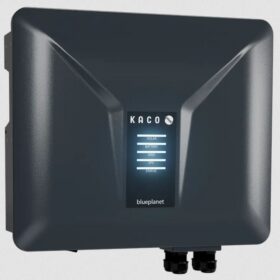
Kaco launches new hybrid inverters for residential applications
The German manufacturer unveiled a new line of hybrid inverters for applications ranging from residential rooftop arrays to projects on small commercial buildings. They have outputs between 6 kW and 12 kW, a maximum efficiency of 98.19%, and a maximum European efficiency of 96.55%.

London Stadium to deploy rooftop solar array
Cleantech specialist Ameresco is installing a 6,500 sqm array of ultra-thin solar panels on the London Stadium. Once complete, the installation will generate 0.85 million kWh of electricity per year – enough to power all of the stadium’s sporting and music events.
Survey shows best fast MPPT techniques for PV
A group of scientists conducted a literature review of almost a hundred fast maximum power point tracking algorithms. They extracted ten representative algorithms and showed which of them works best under different scenarios.

German PV experts develop quality standard for solar modules
The new Solar Module Quality Standard is based on VDE SPEC 90038-1. It will guarantee that PV modules have been produced and tested according to uniform quality criteria.
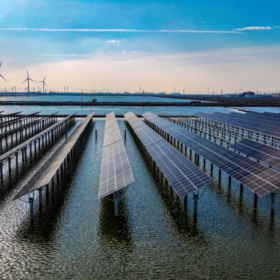
Chinese PV Industry Brief: China adds 160 GW in January-September period
China’s National Energy Administration (NEA) says solar installations reached 160 GW between January and September 2024, with cumulative capacity hitting 770 GW by August.

India surpasses 90 GW of installed solar capacity
India’s installed renewable energy capacity reached 201.46 GW at the end of September 2024, with 90.76 GW coming from solar projects, according to the Ministry of New and Renewable Energy (MNRE).
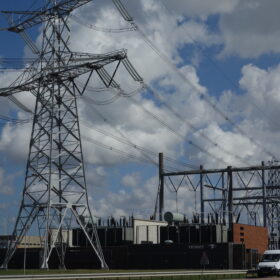
Dutch grid operators propose limitation contracts to free up 880 MW of capacity
Dutch grid operators TenneT, Enexis, Liander, and Stedin say that expanded use of “capacity limitation contracts” among renewable energy operators could free up about 880 MW of additional grid capacity. The contracts are granted by congestion service providers (CSPs), which act as intermediaries in the Netherlands.
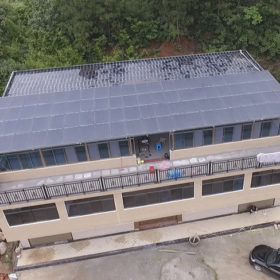
China’s NEA unveils new draft rules to reshape distributed solar market
China’s National Energy Administration (NEA) has released new draft rules to reshape the distributed-generation solar market.

Philippines may terminate 50-plus solar projects for missing deadlines
The Philippines’ Department of Energy says that at least 105 renewable energy projects, including 53 solar projects, face termination for failing to comply with timelines.

Using texturized glass in building-integrated photovoltaics
Researchers from Poland have assessed how texturized glass used as the front cover of building-integrated photovoltaic panels affects performance. They have found power yield could be up to 5% lower compared to modules based on conventional glass, with reflection parameters being up to 88% in visible region.
