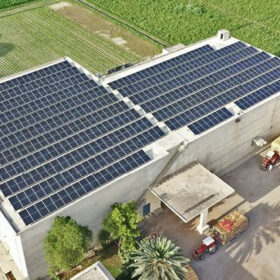
Pakistan blocks retroactive export rate cut in net billing shift
Late amendment put forward to halt sudden retroactive change to export rates for net metering contract holders in Pakistan. It follows strong criticism from local solar industry leaders over sudden change in export rates under new net billing structure.
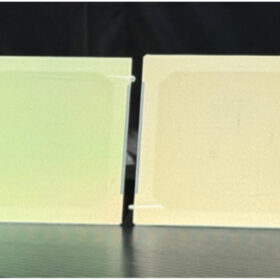
Japanese scientists build near-white heterojunction solar cell for BIPV applications
The lab-scale, near-white heterojunction solar cell uses nanoclay-based scattering layers combined with dielectric multilayer films to preserve power conversion efficiency while enhancing visual appeal. The researchers report optical losses of less than 1% at a 50% clay volume fraction, which are significantly lower than those observed with textured glass.
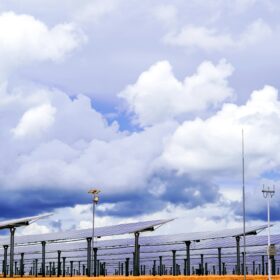
Italy’s new energy provisions could boost gas use, undermine renewables and storage competitiveness
Italy’s new energy decree aims to cut consumer electricity bills, but industry experts warn it could slash solar revenues by over 30%, slow the PPA and battery storage markets, and increase gas-fired generation. The measure also raises regulatory and state aid concerns, potentially making the Italian electricity market riskier for investors.
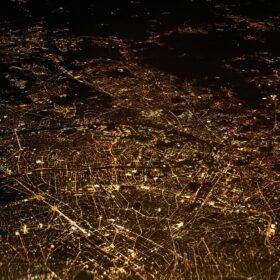
Solar electricity during night-time
Night-time in solar PV systems averages 16 hours, requiring significant storage or alternative generation to meet demand. Pumped hydro and batteries are key, with pumped hydro offering long-duration, low-cost storage for cloudy or windless periods. Complementary strategies include wind power, load shifting, and dispatchable generation, while high solar and wind penetration reshapes grid operations and pricing.

‘Garbage in, garbage out’ – solar industry debates reality of AI
Artificial intelligence can accelerate the planning, construction, and operation of photovoltaic systems, as shown at the recent Solar Quality Summit in Barcelona, Spain. But its effectiveness depends on data quality, as poor data, unclear responsibilities, and weak documentation can become major cost drivers.
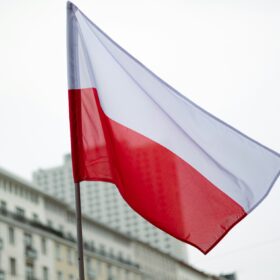
Poland adds 3.6 GW of solar in 2025
Poland’s cumulative solar capacity reached 24.8 GW by the end of 2025, with last year’s growth led by C&I and large-scale installations.
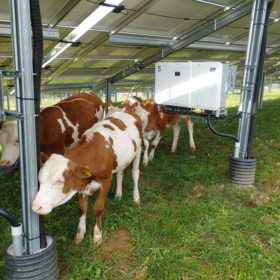
How to protect animals from lightning in agrivoltaics
Researchers in Germany assessed lightning risks in livestock-integrated agrivoltaic systems, identifying key injury mechanisms and establishing safe step and touch voltage limits. Their simulations showed edge strikes and conductive structures pose the highest hazards, highlighting the need for livestock-specific earthing designs and mitigation strategies.
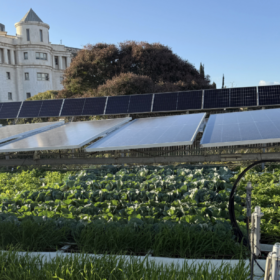
Israel approves rules for agrivoltaics
A zoning masterplan for agrivoltaics in Israel specifies solar panel coverage must not exceed 30% of the cultivated area. The lower edge of panels must be at least 1.5 m above the ground for field crops, increasing to 4.5 meters for orchards and other crops.
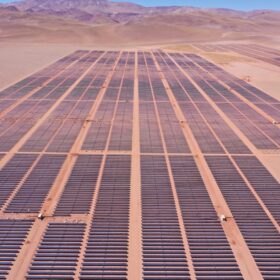
Argentina adds 810 MW of solar capacity in 2025
Argentina added around 810 MW of solar PV capacity in 2025, bringing total installed PV capacity to 2,483 MW, according to data from Compañía Administradora del Mercado Mayorista Eléctrico (CAMMESA).

When hail hits PV: New research maps damage, testing, and mitigation
A new review examines the impact of large hail on PV systems, covering damage, testing methods, and mitigation strategies. Researchers highlight risks across Europe and the U.S. and explore ways to improve module resilience.
