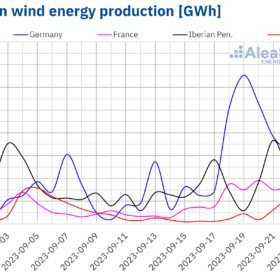
Higher wind production pushes down prices in European electricity markets
In the third week of September, European electricity markets prices fell compared to the previous week. The decline was due to lower demand and a significant increase in wind energy production in several markets, which offset increasing gas and CO2 prices. On September 25, TTF gas futures reached their highest level since early April and on September 18, Brent reached its highest settlement price since November 2022.
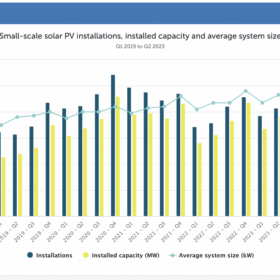
Australia’s rooftop PV installations hit 1.4 GW in H1
New statistics from Australia’s Clean Energy Regulator show that 2023 could be another record year for distributed solar.
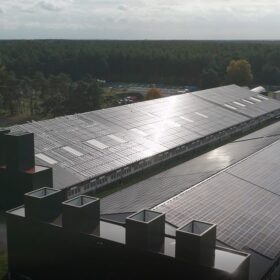
Germany’s new solar installations hit 1.05 GW in August
Germany’s new solar installations surged to 1.05 GW in August, contributing to 8.99 GW of newly installed PV capacity for the first eight months of this year. This marks significant growth from the 4.8 GW installed during the same period in 2022.

Sunmaxx builds 50 MW PV-thermal solar module factory in Germany
Sunmaxx PVT, a photovoltaic-thermal solar module specialist, has started building an automated 50 MW module factory near Dresden, Germany.
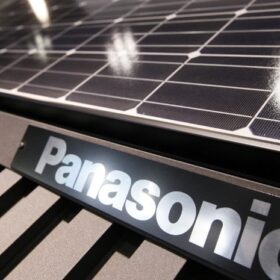
Panasonic introduces half-cut HJT residential solar modules
Panasonic unveiled its new residential solar modules – including half-cut heterojunction (HJT) models, along with a home battery system and energy management device – at the recent RE+ trade show in Las Vegas.
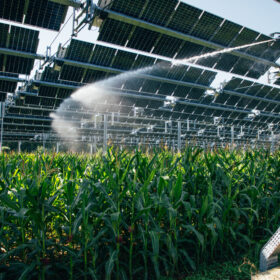
French developer builds agrivoltaics facility with irrigation system
TSE has installed a 2.9 MW agrivoltaics plant in northern France with sensors to trigger an irrigation system. The irrigation setup can reportedly achieve significant water savings. The company is selling the electricity under a 20-year power purchase agreement (PPA).
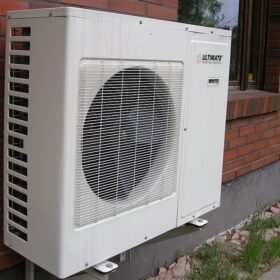
Heat pump adoption in Canada
The Canadian Climate Institute has released a report that explains how to unlock lower-cost heating and cooling in Canada. It outlines barriers to adoption and makes recommendations to streamline the loan and grant application process.
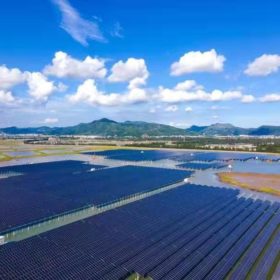
Chinese PV Industry Brief: China to add 170 GW of PV in 2023, says S&P
S&P Global Commodity Insights says it expects China to install 170 GW of solar in 2023, with global capacity additions to potentially surpass 400 GW.
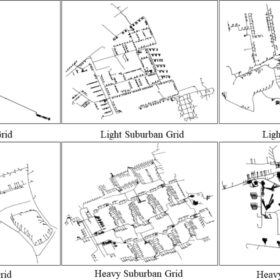
Suburban grids most vulnerable to high levels of EV, heat pump, PV
Researchers from the Netherlands have assessed the potential integration of heat pumps, electric vehicles, and PV systems into distribution grids. They have discovered that suburban grids could face a higher risk of overload. By using actual data from Dutch distribution grid operators, they believe their methodology could be applied to study energy systems in other nations.

UK may rejoin GW club this year
Recent data published by Great Britain’s Department for Energy Security and Net Zero (DESNZ) show the country’s solar PV cumulative capacity was 15,292.8 MW at the end of July, with newly installed capacity for the first seven months of this year reaching 643 MW. Although Gareth Simkins of Solar Energy UK said these figures were ‘relatively low’, he explained that several utility scale PV plants may have not been included in the statistics so far and there was cause for optimism.
