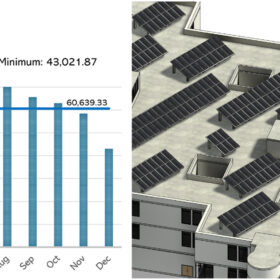
The impact of azimuth angles on PV power production in Saudi Arabia
Researchers in Saudi Arabia conducted a year-long simulation of fixed-tilt PV panels at different azimuth angles, finding that south-facing panels (180°) maximize energy production, while up to 45° eastward shifts cause minimal losses.
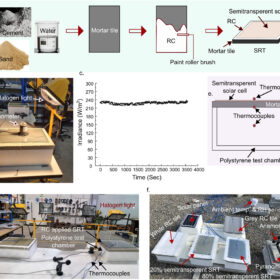
New reflective coating increases BIPV power output by 11%
Australian researchers developed a low-cost reflective coating for semi-transparent solar roof tiles that lowers surface temperatures by up to 20 C and boosts power output by up to 11.7%. Simulations across five global cities showed energy savings of up to 5.85%, highlighting the coating’s strong potential for improving both building cooling efficiency and solar performance in BIPV systems.
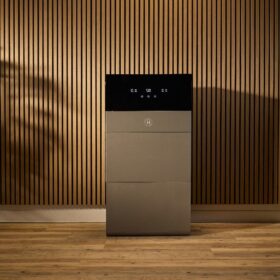
Hoymiles releases all-in-one residential inverter and modular battery
The Chinese company said its modular system supports up to 64 kWh of storage, multiple PV inputs, and 0 ms backup switching for uninterrupted operation.

Spain deploys 1.13 GW of solar for self-consumption in 2025
Spain installed 1.14 GW of solar capacity for self-consumption in 2025, lifting cumulative capacity to 9.3 GW, as residential and commercial installations declined while industrial and off-grid segments showed greater resilience, according to data from the Spanish Photovoltaic Union.

Cyprus installs 122 MW of solar capacity in 2025
Self-consumption PV projects accounted for most of the new solar capacity added in Cyprus last year, despite record levels of renewable energy curtailment, according to industry data.
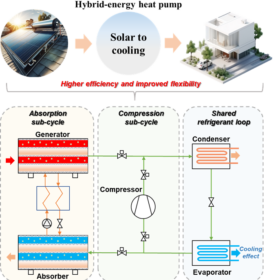
Scientists unveil hybrid-energy heat pump combining absorption and compression cycles
Researchers in Hong Kong have developed a hybrid-energy heat pump that seamlessly combines absorption and compression cycles using crystallization-free ionic liquids, improving efficiency and reliability across varying solar conditions. Simulations in multiple Chinese cities show the system can significantly cut electricity use and cooling costs, making it promising for sustainable building cooling and future commercial scaling.
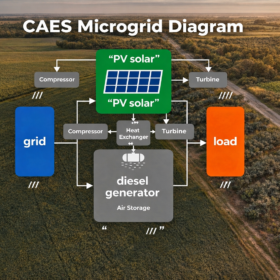
How to combine C&I solar with compressed air energy storage
Researchers have studied the potential of combining photovoltaic systems with compressed air energy storage (CAES) to power a commercial building in South Africa. They found that a co-optimized system could lower total capital costs by 15–20% compared to traditional sequential sizing approaches.

Japan’s solar industry targets vertical bifacial PV with new guide
The Japan Photovoltaic Energy Association (JPEA) has released a voluntary reference guide to support adoption of vertical bifacial PV in Japan, outlining design, performance, and compliance considerations for projects in snow-prone, high-latitude, and space-constrained conditions.
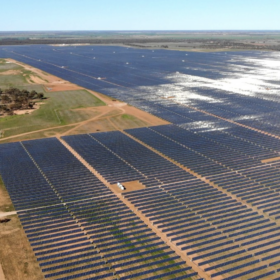
Australian state’s utility-scale solar tops 1 TWh in December
Solar farms in New South Wales led the way for Australia’s utility-scale PV energy output in December 2025, generating 1,052 GWh of renewable electricity.
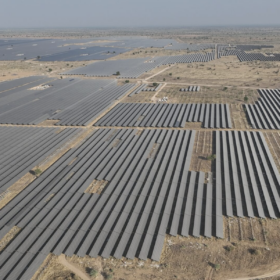
India’s solar capacity additions on track in 2025, says SBICAPS
India added an estimated 40 GW of solar capacity in calendar year 2025, driven by utility-scale projects and rooftop growth. Energy storage tendering also picked up pace.
