
Cutting edge module tech promised on first, 3 GW slice of 10 GW Chinese solar installation
Huanghe Hydropower Development has started work on the first phase of a huge renewable energy project which will eventually feature 10 GW of solar generation capacity along with 5 GW of wind and 1 GW of concentrating solar power. Trina will supply 600 MW of modules to the first phase of the facility.
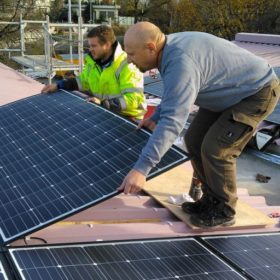
Residential solar set new US record in the last quarter with 712 MW
The U.S. residential solar market – and 15 states – are at record highs according to analyst WoodMac’s ‘don’t call it a comeback’ Q3 report, driven by new market forces. The research firm held its 2019 U.S. solar forecast at 13 GW.
Hydrogen production as an antidote to grid constraints in northern Netherlands
Dutch transmission system operator Enexis, gas provider Gasunie and oil company NAM are considering diverting excess solar capacity in Drenthe province into hydrogen production. The companies are assessing which wind and solar projects may have been excluded from the grid.

Eastern Spain to host 1.58 GW solar park
Spanish energy company Endesa is planning to build a 1,725 MW renewable energy complex in the Spanish town of Andorra, in the province of Teruel. The €1.48 billion project is set to comprise 1,585 MW of solar generation capacity, 139 MW of wind turbines and a large scale storage system, and will replace coal power plants Endesa wants to close in Andorra (Teruel) and Compostilla (León).

Power Ledger, Japan’s Kepco extend blockchain energy collaboration
Japanese utility Kansai Electric Power has extended a demonstration project with Australian P2P energy pioneer Power Ledger to track renewable energy certificates and trade PV-generated electricity.

EU green-lights aid for European Battery Alliance
The European Commission has approved state aid for the so-called European Battery Alliance to promote the development of a lithium-ion battery supply chain in the European Union.

2.2 MW/1.5MWh of storage linked to 5 MW off-grid PV plant in Tunisia
Italian gas and oil producer Eni has followed the recent commissioning of a 10 MW solar+storage project in Pakistan with the completion of a similar off-grid installation at an oil field in Tunisia. The power plant was built in partnership with Tunisian state-owned oil company Entreprise Tunisienne d’Activités Pétrolières

Solaredge brings its three-phase inverter with integrated memory interface to Europe
Solaredge wants to enable households have a higher solar self-consumption with its new product. The Israeli PV company’s solution can now be ordered in Germany, Austria, and Switzerland.

Solar to the fore as Athens Airport announces plan for net zero carbon ground operations by 2025
Greece’s largest international airport has set a goal to operate as a net zero carbon emitter by 2025, mainly via investing in on-site solar. Should the goal be met, the airport will be Europe’s first to rely on self-generated electricity and operate with net zero emissions.
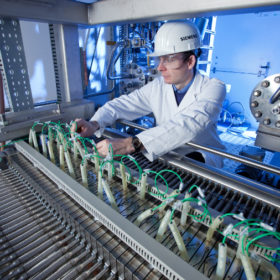
European Investment Bank signs hydrogen investment deal
The EIB and the Hydrogen Council aim to jointly develop new ways to generate funding for hydrogen projects under the European Commission’s InnovFin Advisory program. The two parties, however, have not disclosed the financial terms of their planned collaboration.
