
TBEA unveils grid-forming converter for large-scale storage, renewables
Chinese power transformer manufacturer TBEA introduced a grid-forming string power conversion system (PCS) for utility-scale storage, renewable energy base projects, and weak-grid applications. The TE435/392K-HV-BL high-power converter focuses on improving power density and grid support. According to TBEA, its fully integrated liquid-cooling design increases volumetric power density by 78% and gravimetric power density by 32% […]
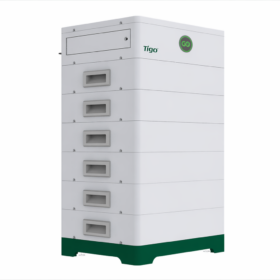
Tigo releases modular battery for residential PV
The US manufacturer has launched a modular residential battery for Europe, scalable from 7.3 kWh to 47.9 kWh with LFP chemistry and IP65 protection. The system offers up to 23.3 kW nominal power, over 6,000 cycles, and a depth of discharge of 90%.
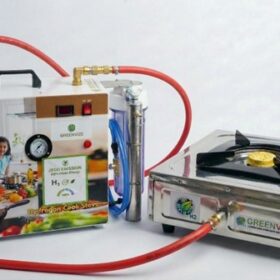
Indian startup launches plug-and-play hydrogen cooking unit
Indian clean-tech startup Greenvize has launched a compact hydrogen-based cooking system designed for residential and commercial kitchens. The system integrates a proton exchange membrane (PEM) electrolyser directly into a cooking unit, enabling on-site hydrogen generation from water without the need for storage or distribution infrastructure.

‘Photovoltaics are, first and foremost, about energy security’
In an interview with pv magazine, Carolina Novac, Secretary of State at Moldova’s Ministry of Energy explains how the country raised its solar capacity to 1 GW while advancing wind, storage, and regulatory reforms to strengthen energy security and reach 30% renewables by 2030. The Moldovan government is now focusing on scaling BESS, modernizing the power market, and enhancing cybersecurity through stronger policies and international cooperation.
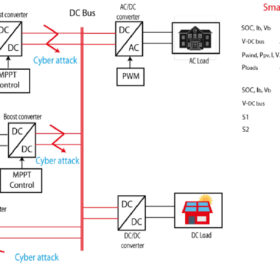
All emerging cyber threats targeting power infrastructure at a glance
Researchers in Moroco analyzed cybersecurity challenges in smart grids, highlighting AI-driven detection and defense strategies against threats like distributed denial-of-service, false data injection replay, and IoT-based attacks. They recommend multi-layered protections, real-time anomaly detection, secure IoT devices, and staff training to enhance resilience and safeguard power system operations.

How much agrivoltaic shading is enough
Spanish researchers found that semi-transparent silicon PV greenhouses boosted tomato fruit weight by 25% while generating 726.8 kWh over two seasons, outperforming cadmium telluride PV and shaded controls. The PV-Si system balanced sunlight, temperature, and energy, showing strong agrivoltaic potential.

Malaysia’s solar capacity surpasses 5.7 GW
Reports from the International Energy Agency’s Photovoltaic Power Systems Programme (IEA-PVPS) indicate Malaysia added over 1.4 GW of solar in 2025, with more than 5.7 GW now deployed across multiple government schemes.

Hydro-Québec launches grant for residential, commercial solar
Hydro-Québec has introduced a grant offering up to CAD 1,000 ($718.40) per kilowatt installed, covering up to 40% of eligible costs to accelerate rooftop solar adoption and reduce payback periods for residential and business customers in the Canadian province of Québec.
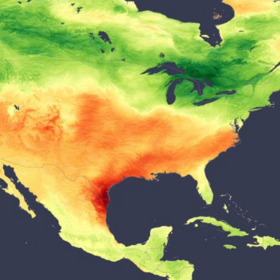
Heat dome and high pressure boost southern US solar as polar vortex clouds the north
In a new weekly update for pv magazine, Solcast, a DNV company, reports that last month North America saw a stark solar divide, with southern regions like northeastern Mexico, southeastern Texas, and much of California experiencing 20–25% above-average irradiance, while Canada, the Great Lakes, and the northeastern U.S. faced persistent cloudiness and below-normal solar conditions. This contrast was driven by high-pressure systems and a southwestern heat dome in the south versus a polar vortex bringing cold air and storms to the north.
Zambia tenders 300 MW of solar
The first bid window of Zambia’s new Carbon Feed In Premium Program plans to develop 300 MW of solar across projects that are connected to on-site battery energy storage systems. The deadline to submit expressions of interest is May 31.
