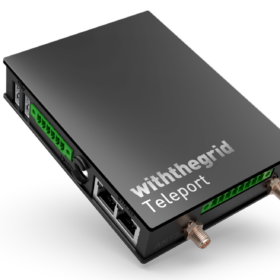
Real-time interface to reduce Netherlands’ grid congestion
All new PV plants over 1 MW in the Netherlands will have to use a real-time interface to make their facilities better communicate with the grid operator starting from next year. Utrecht-based Withthegrid, has developed an interface that is compatible with a number of brand-name inverters.

Bangladesh Jute Mills Corp. signs PPAs for 90 MW of rooftop PV
Bangladesh Jute Mills Corp. (BJMC), which manages all government-owned jute factories and industries in the South Asian country, has agreed to buy power from six different project developers under a 20-year power purchase agreement (PPA).

Israel frees up grid space for 2 GW of renewables
Israel has announced plans to deploy 2 GW of grid-connected renewables. It will allow for additional renewable plants to be built without causing grid congestion, based on specific parameters.
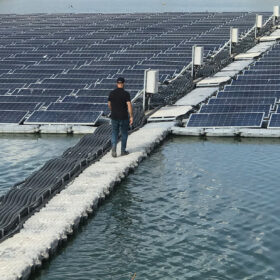
Philippines to build new 100 MW floating solar power farm
Zonal Renewables plans to construct a new 100 MW floating solar project on a 90-hectare fishpond in the Philippines, in Cadiz, Negros Occidental province.
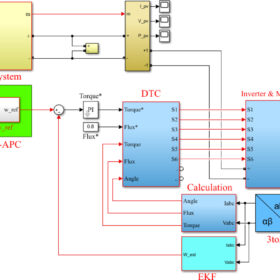
New control strategy for PV-powered water pumps operating under variable atmospheric conditions
Scientists in Turkey have developed a new algorithm to optimize the efficiency of PV-powered water pumps. The novel technique is based on the Extended Kalman–Bucy filter, which is a predictor-corrector algorithm used extensively in control systems engineering for estimating unmeasured states of a process.
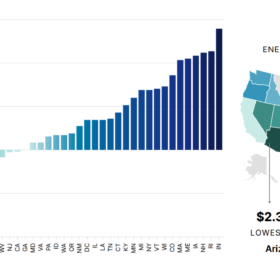
Residential solar average payback period is 8.3 years in U.S., said EnergySage
Pricing is beginning to cool slightly, but financing terms have changed from 2.99% to 4.99% for a 25-year loan.
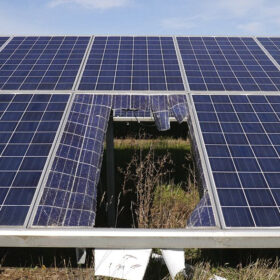
Weekend Read: A 10 GW time bomb
It is estimated that 10 GW of solar modules in Germany suffer from prematurely aging backsheets, with sites of all sizes affected. pv magazine Germany’s Cornelia Lichner looks at how to detect and repair such defects.
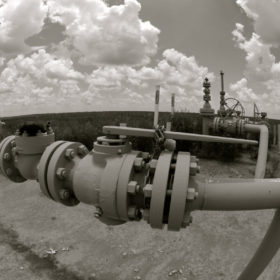
The Hydrogen Stream: combination of power grid expansion and hydrogen network cheapest option in a net-zero system
Researchers found out that the cheapest way to reach a net-zero system in Europe includes a power grid expansion and a hydrogen network. Meanwhile, Lhyfe signs a PPA for its hydrogen facility in Bretagne, and Nortegas reaches 15% of hydrogen in replica of its distribution network in Spain.
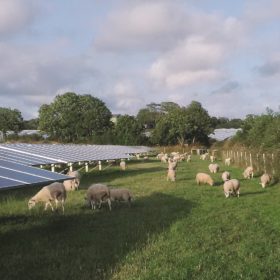
UK allocates 1.9 GW of solar at $59/MWh
The UK government has announced the results of its latest renewable energy auction, originally planned for 2022. It was accessible to installations exceeding 5 MW in size, with 56 solar projects securing 15-year contracts-for-difference (CfDs).
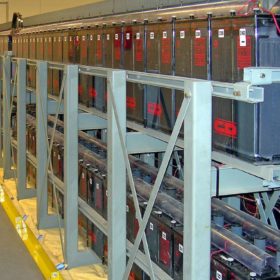
Distributed PV, battery storage curtailment in low-voltage networks
University of New South Wales (UNSW) researchers have looked at energy losses in South Australia and have identified average curtailment of 1.5% for distributed PV sites and 0.2% for distributed PV coupled with batteries, but some locations experience generation losses of up to 25%.
