
Hungary cements position in solar gigawatt club
Hungary, one of Europe’s gigawatt-scale solar markets, is a hub of bustling activity. However, government policy shifts and grid constraints are casting a long shadow over growing demand for solar energy. pv magazine recently spoke with Ádám Szolnoki, the president of the Hungarian Photovoltaic Industry Association (MANAP), about the latest market developments.
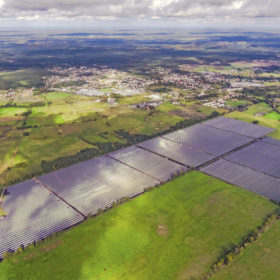
Headwinds of the Polish PPA market
Power purchase agreements (PPAs) are growing in popularity in Poland due to high energy prices and the declining appeal of renewable energy auctions. Nevertheless, regulatory changes have created uncertainty and reduced attractiveness.

Deye unveils high-voltage hybrid inverters for rooftop PV applications
Deye’s new three-phase hybrid inverters have efficiency ratings of up to 97.60% and European efficiency ratings of 97.0%. They are available in five versions, with power outputs ranging from 29.9 kW to 50 kW.
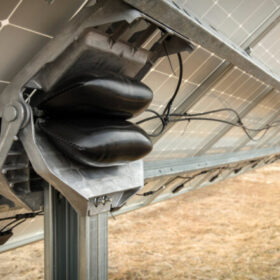
Terrain-following solar tracker with a pneumatic twist
Sunfolding’s new TopoTrack rows are reportedly 10 times shorter than traditional trackers, and they can provide 20 degrees of variation between trackers, thus improving slope tolerance between rows.

Solar, wind covered Belgium’s entire electricity demand for the first time
Belgian grid operator Elia announced that solar and wind generation provided enough electricity to cover the country’s entire electricity demand for the first time this Monday.
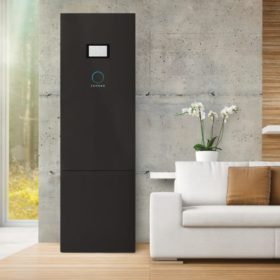
UK plans to slash VAT on residential batteries
The UK cabinet plans to introduce a new measure to eliminate the value-added tax (VAT) on residential batteries installed after solar panels.
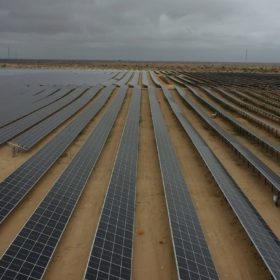
India launches tenders to assign 1.8 GW of PV capacity
Rajasthan Rajya Vidyut Utpadan Nigam (RVUNL) says it is accepting bids for 810 MW of state transmission utility (STU)-connected PV projects in Bikaner, India. In a separate development, Punjab State Power Corp. has issued a request for selection to buy 1 GW of solar power from grid-connected PV projects.

Bahrain’s port to host $10 million solar project
The A.P. Moller-Maersk subsidiary says that by installing 20,000 solar photovoltaic panels, it will make Bahrain’s Khalifa Bin Salman Port the region’s first seaport to be fully powered by renewable energy.
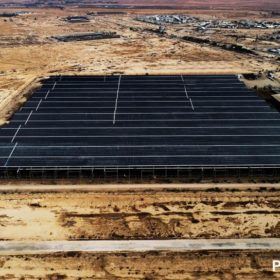
Israel launches tender to lease land in Negev desert for solar deployment
The Israeli authorities said new solar projects will be built in Israel’s Ramat Bekaa special industrial zone.
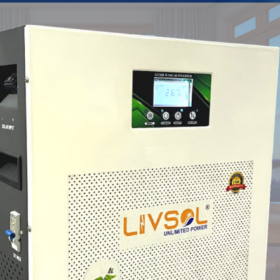
India’s Livsol unveils wall-mounted battery inverter
India’s Livsol has released 300 VA, 1 kVA, 2 kVA, 3 kVA, and 5 kVA versions of its new wall-mounted lithium battery inverters, with operating voltages of 12.8 V, 12.8 V, 25.6 V, 51.2 V, and 48 V.
