
Gambia launches tender for 50 MW solar-plus-storage project
Gambian utility Nawec is seeking proposals for a 50 MW PV facility planned to be deployed in Soma, south of the River Gambia. The project is part of a broader solar project eventually including unspecified battery storage capacity.
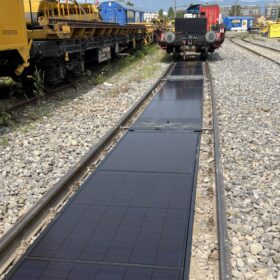
Switzerland authorizes removable PV plant on railway track
Swiss startup Sun-ways is planning to build a 18 kW pilot PV system between the racks of a 100-m linear section of a railway line in the Swiss canton of Neuchâtel.

Volue unveils intraday trading solution for wind, solar
Norway’s Volue has launched an automated trading tool for solar and wind operators covering most European power markets . The Volue Position Closer is a subscription-based tool targeted at renewable energy producers, portfolio managers, and municipal utilities.
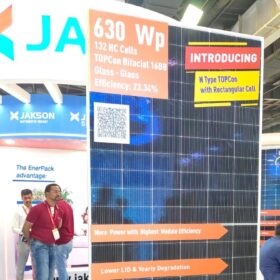
Jakson Solar launches 630 W bifacial TOPCon PV modules
Jakson Solar’s Helia NXT R series PV modules utilize rectangular 16-busbar n-type TOPCon cells and have an efficiency of up to 23.34%.
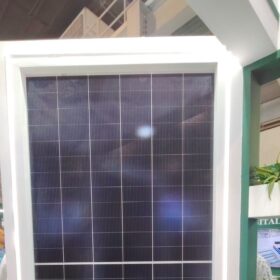
Reliance introduces bifacial heterojunction solar modules
The India-based module producer said its new panels have a power conversion efficiency of up to 23.1% and a temperature coefficient of -0.24% per C.

Spain’s Acciona advances 2.4 GW of energy storage, 1.8 GW solar-wind hybridization
Acciona Energía has just launched its second hybrid wind-solar project in Spain, at Villalba del Rey and Tinajas. A new, 19.7 MWp solar field has been added to a 26 MW wind complex.

Italy’s regional governments approve 5.1 GW of utility-scale PV projects in January-September period
Italy’s regional governments approved 5.1 GW of solar in the first nine months of this year, with Sicily leading by approving around one-third of the total new capacity.
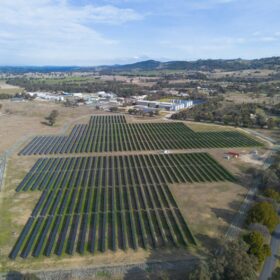
Flow Power plans DC-coupled battery to boost solar flexibility
Australian renewables developer and electricity retailer Flow Power will install a 3 MW DC-coupled battery energy storage system alongside the recently completed Cootamundra Solar Farm in New South Wales in a move designed to improve the flexibility of the facility.
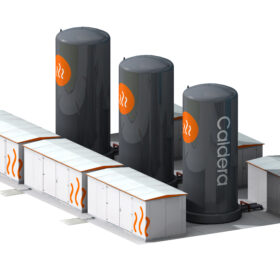
Storing solar power through aluminum-rock composite
UK-based Caldera has developed a new heat storage technology that can reportedly convert on-site generated solar power into on-demand heat, thus replacing conventional gas boilers. The system uses a composite of recycled aluminum and volcanic rocks to store heat at up to 500 C and produce steam.

EWEC opens 1.5 GW solar tender in Abu Dhabi
Through the procurement exercise, the Emirates Water and Electricity Co. (EWEC ) is planning to build a giant solar farm in the Al Dhafra Region.
