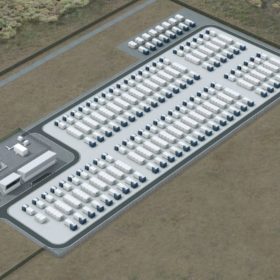
Australian utility accelerates clean energy shift with 8 GW acquisition
Energy giant AGL has stepped up its transition away from coal and gas, adding a development pipeline of more than 8 GW of large-scale solar and battery energy storage projects to its portfolio with the acquisition of two Australian renewable energy developers.
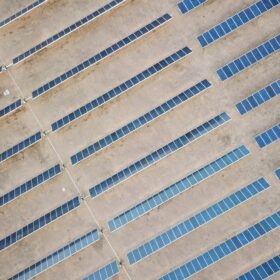
B2Gold building 10 MW of solar at Namibian mining site
The Namibian unit of Canada-based mining company B2Gold Corp. is building a $11 million solar project at the Otjikoto Mine in central Namibia. The installation is scheduled to start operations in January 2025.
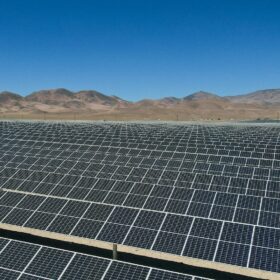
China’s CEEC wins 2 GW solar project in Saudi Arabia
China Energy Engineering Corp. (CEEC), via its subsidiaries, has signed an engineering, procurement and construction (EPC) contract for a 2 GW solar installation in Saudi Arabia. It will handle the project in collaboration with a project company established by ACWA Power Company.

US community solar to double by 2029, says Wood Mackenzie
Cumulative community solar installations are forecast to increase from less than 7 GW installed today to more than 14 GW in five years.
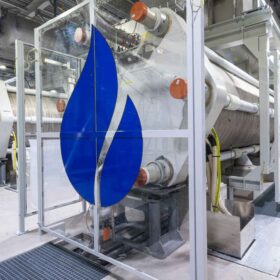
The Hydrogen Stream: RWE starts green hydrogen production in Germany
RWE has commissioned a 14 MW pilot electrolyzer plant in Lingen, Germany, while Thyssenkrupp nucera says market uncertainty has slowed growth momentum, despite a 12% increase in third-quarter order intake.

India installs 12.1 GW of solar in H1
India installed about 9.6 GW of utility-scale solar, 1.8 GW of rooftop PV, and 688 MW of off-grid capacity in the first half of 2024, or roughly 12.1 GW in total, according to a new report by JMK Research.

Agrivoltaics for corn
Researchers have created a novel model that can help developers assess corn growth in agrivoltaic facilities. They also proposed to use spatiotemporal shadow distribution (SSD) to optimize crop yield and power production.
Offgrid PV-driven hydrogen vs. standalone solar-plus-storage
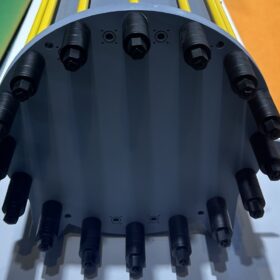
A German research team has compared the economic performance of an offgrid PV-electrolyser-fuel cell system with that of a standalone solar-plus-storage counterpart in a building in Niger. Its analysis showed that decentralized PV-driven hydrogen could achieve considerable lower levelized cost of energy and levelized cost of storage than the PV-battery system, with these values reaching €0.12 ($13.1)/kWh and €0.35/kWh, respectively.
India allocates 500 MW solar at average price of $0.030/kWh
SAEL Industries, NTPC, and BluPine Energy have emerged as winners in Solar Energy Corp. of India’s (SECI) latest auction for 500 MW of solar capacity, at an average price of INR 2.48 ($0.030)/kWh.
EBRD to finance 120 MW of solar in Tunisia
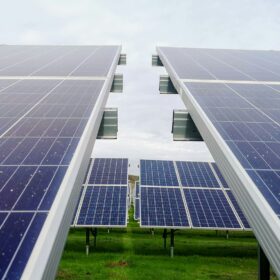
The European Bank for Reconstruction and Development (EBRD) has approved a €12.5 million ($13.7 million) loan to finance the construction of two 60 MW solar power plants in Tozeur and Sidi Bouzid, Tunisia. The projects, developed by Scatec and Aeolus, will enhance energy security and support Tunisia’s green transition.
