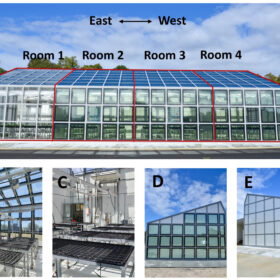
Photovoltaic windows can reduce energy consumption in greenhouses by 57%
Developed by a research team including experts from Australian specialist Clearvue, the new PV windows were also able to reduce water usage in a greenhouse by 29%. The group believes that a fully glazed solar greenhouse could offset up to 100% of the energy consumption in worldwide locations by using adaptable and efficient temperature control techniques.
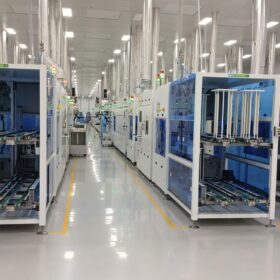
Waaree commissions first phase of 5.4 GW solar cell factory
Waaree Energies has started commercial production from the first 1.4 GW of its planned 5.4 GW solar cell manufacturing capacity in Gujarat, India.
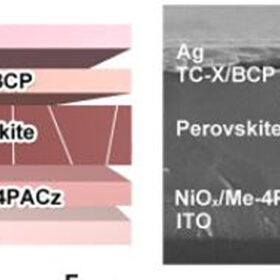
Inverted perovskite solar cell based on stabilized C60 achieves 25.6% efficiency
An international team has utilized an n-type polymeric additive to stabilize C60 molecules for use in inverted perovskite PV cells. Thanks to this approach, the researchers built a solar cell with the highest efficiency value ever recorded for perovskite devices based on solution processed C60 electron transport layers.

Mitrex launches solar PV railing systems
The Canadian building-integrated PV manufacturer has launched semi-transparent and opaque solar PV railing systems for balconies or walkways, for retrofit or new buildings. The products are delivered with support bars, concealed cabling and a choice of mounting systems.

JinkoSolar sues Longi in Australia in third patent case this year
JinkoSolar has sued Longi for alleged patent infringement in Australia, its third legal action against the company this year, following filings in China and Japan. The lawsuit, filed in the Federal Court of Australia, claims that Longi used an unspecified solar cell technology.
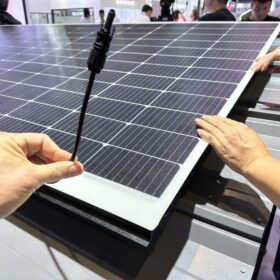
Sinovoltaics updates PV module manufacturer financial stability ranking
The latest ranking based on Altmann-Z scores sees India-based Insolation Energy, Waaree Renewable Technologies, and Solex Energy retain the top three spots. But further below in the ranking, analysts see more firms with lower scores compared to the last quarter.
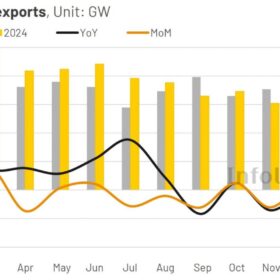
China exports 235.9 GW of solar panels in 2024
China exported 235.93 GW of PV panels in 2024, a 13% increase over the previous year. Of this, 94.4 GW were shipped to Europe, down 7% from 2023.

China imposes export controls on critical minerals for thin-film PV
China has announced new export restrictions on materials essential for the thin-film solar industry, including critical minerals such as tungsten, tellurium, and indium.
Chinese PV Industry Brief: UtmoLight starts perosvkite module production
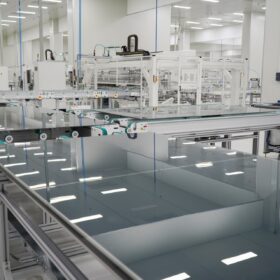
UtmoLight says it has launched the world’s first gigawatt-scale perovskite solar module production line at a facility in Wuxi, China. The plant will annually produce 1.8 million panels, with a target of achieving 20% efficiency in mass production by 2025.

Research shows floating PV can reduce lake water temperature by 1.2 C
A before-after-control-impact study conducted at six French lakes for three years has revealed that PV coverage decreases water temperature by 1.2 C on average. The reduction in water temperature also occurred in areas of the lakes that were not covered with modules.
