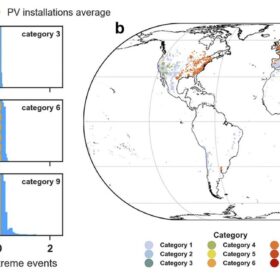
Researchers warn of risk from weather-related extreme low-production events for global PV fleet
New research from China shows that regions with dense PV installations, such as Southern China, Central and Northern Europe, Central and Eastern America, and Japan, are the most exposed to weather-related extreme low-production events. The researchers proposed a mitigation strategy to reduce the impact of these events on PV power generation.
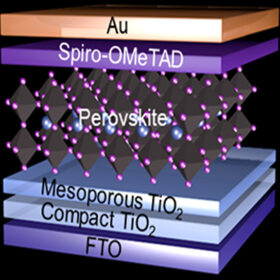
Moisture-resistant perovskite solar cell with 25.14% efficiency
An international research team has fabricated a perovskite solar cell using sulfur-based additives to improve its resistance to moisture. The device not only achieved high efficiency levels but was also able to retain about 96% of its efficiency after 1,000 h.

pv magazine Awards 2024 winners revealed
More than 300 entries from across 36 countries were received for the pv magazine Awards 2024, making this year’s program the most competitive yet. From modules and inverters to projects and storage, innovation was on display across the board.
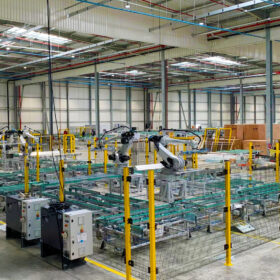
Ecoprogetti expands solar production line to 1 GW in Morocco
Italian manufacturer Ecoprogetti has ramped up the capacity of a PV production line in Morocco, operated by Almaden Morocco, from 500 MW to 1 GW.

Mercedes-Benz testing new solar paint
Mercedes-Benz said it is now evaluating a 20%-efficient, non-silicon photovoltaic coating that is significantly cheaper than conventional solar modules.
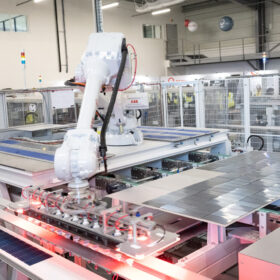
Reden Solar inaugurates 200 MW solar module production line in France
Reden Solar has launched a 200 MW solar module production line in France, with capacity to produce up to 300,000 modules per year, primarily for its own renewable electricity projects.
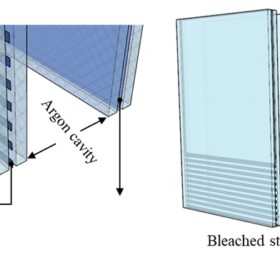
Chinese scientists develop photovoltaic window with heat flow control
The novel smart solar window combines photoelectric and electrochromic functions. It can produce electricity while also regulating the amount of solar radiation entering a building.
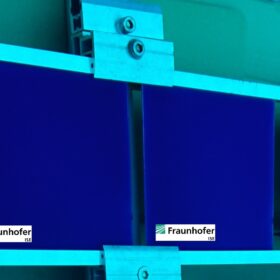
Fraunhofer ISE warns of risk from higher than expected UV-induced degradation in TOPCon, PERC, HJT cells
The researchers of the German institute explained that UV-induced degradation may cause larger than expected efficiency and voltage losses in all dominant cell technologies, including TOPCon devices. The scientists expect that silicon nitride layers could be used to enhance TOPCon UV stability compared to PECVD layers typically utilized in PERC and heterojunction cells.

Indian scientists develop 40%-efficient dye sensitzed solar cell for indoor applications
An India-based research team has boosted the power conversion efficiency and stability of indoor dye-sensitized solar cells based on co-sensitized organic dyes. The best indoor PV devices achieved 40% efficiency under 4000 lux fluorescent lighting and 10.40% under standard AM 1.5G one sun illumination.

Chinese PV Industry Brief: China Coal secures 4 GW of modules at $0.10/W
China Coal Energy Group (China Coal) has ordered 4 GW of solar modules from JinkoSolar, Tongwei, JA Solar, and DAS Solar at $0.10/W, including 3 GW of tunnel oxide passivated contact (TOPCon) panels and 1 GW of passivated emitter and rear cell (PERC) products.
