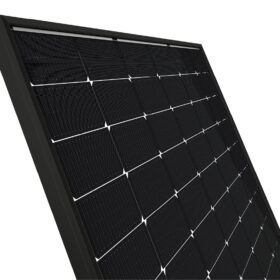
JinkoSolar sues VSUN for alleged patent infringement
China-based panel maker JinkoSolar says that its competitor VSUN and its related entities in the United States have infringed on one of its patents.
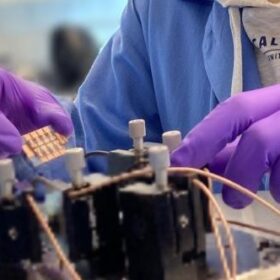
Inverted perovskite solar cell based on amidinium passivator achieves 26.3% efficiency
An international research team has fabricated an inverted perovskite solar cell with an electron transport layer passivated with amidinium ligands instead of ammoniun ligands. The device achived not only a superior performance compared to reference cells treated with ammonium, but also showed remarkable stability.
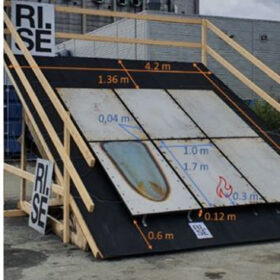
What happens when fire hits PV systems deployed on sloped roofs
An international research team has observed how fire propagates in PV systems installed on flat roofs and has found that a certain amount of energy is needed for a fire to start and propagate in the cavity below the solar panels.
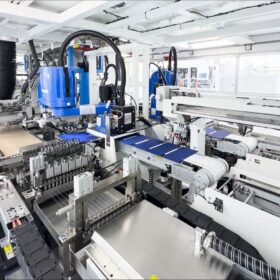
SunDrive achieves copper plating production yield of more than 99%
Australian solar module manufacturing is nearing large-scale production, as SunDrive has achieved a copper plating production yield exceeding 99%, while also signing a deal with Capral Aluminium.
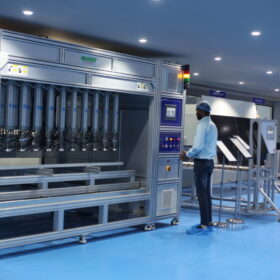
Waaree Energies secures NABL accreditation for testing lab
Waaree Energies has secured NABL India accreditation for the PV Module Test Lab (PMTL) at its Chikhli module manufacturing facility in in the Indian state of Gujarat.
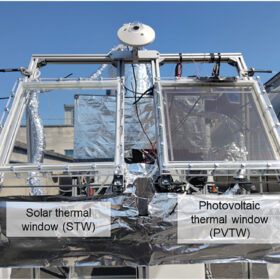
Photovoltaic-thermal window achieves 3.6% electrical efficiency, provides hot water at 50 C
Scientists have developed a window that uses a semi-transparent amorphous silicon PV layer. The group tested the system in London at different inclination angles and found it can achieve a maximum electrical efficiency of 3.6% and a maximum thermal efficiency of 17.6%.
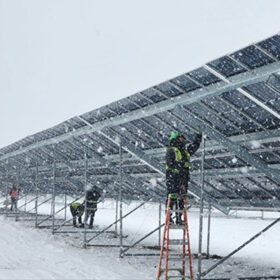
The frost heave challenge in solar installations
A Terrasmart Innovation Engineer looks at ways of overcoming weather challenges particular to the installing solar in Midwest states.

Maxeon Solar reports $179 million Q3 loss
The Singapore-headquartered company has faced product detainment by U.S. Customs and has announced plans to focus solely on the U.S. market.
Chinese PV Industry Brief: Yonz Technology to build 100 GW factory
Yonz Technology says its Yonz Industrial Technology (Baotou) subsidiary will build a 100 GW aluminum PV frame factory for CNY 3.5 billion ($481.8 million) in Baotou, Inner Mongolia.
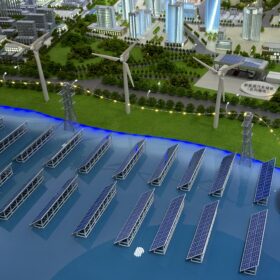
Exploring the role of hybrid energy hubs: introducing IEA PVPS Task 20
The International Energy Agency Photovoltaic Power Systems Programme (IEA PVPS) is starting a new Task 20: Energy Hubs for Green Hydrogen. This joint effort with the IEA Wind and Hydrogen Technology Collaboration Programmes (TCPs) seeks to advance the integration of wind, solar, and hydrogen technologies into hybrid energy systems that produce green hydrogen efficiently and sustainably. Running from 2025 to 2028, Task 20 will address the practical, technical, environmental, and societal challenges associated with hybrid energy hubs, providing actionable insights for their implementation on a global scale.
