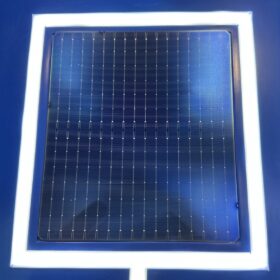
All solar cell efficiencies at a glance – updated
The research group led by Professor Martin Green has published Version 65 of the solar cell efficiency tables. There are 17 new results reported in the new version.

Barcelona testing PV shade canopies
The Barcelona City Council is piloting two solar system prototypes designed to provide shade, generate power, and filter air.

Colombian researchers design agrivoltaic system with hydroponic towers
Colombian researchers have designed an agrivoltaic system integrating hydroponic growing towers. The modular array, consisting of stackable 20 cm rings, creates a structure up to 2.5 meters tall, optimized for cultivating approximately 80 plants per square meter.

Perovskite-silicon tandem solar cell based on indium oxide buffer layer achieves 30.04% efficiency
Researchers in China have fabricated a perovskite-silicon tandem solar cell that utilizes an indium oxide sputtering buffer layer to protect the perovskite absorber and the electron transport layer from potential damages arising from the electrode deposition process. The new layer not only ensured this protection but also showed strong optical and electrical properties.
Australia eyes AUD 1 trillion in clean energy exports by 2060
The Superpower Institute, an Australian nonprofit think tank, says the nation’s clean energy export revenue could reach AUD 700 billion ($457 billion) based on current output levels, with potential growth pushing the figure to AUD 1 trillion by 2060.
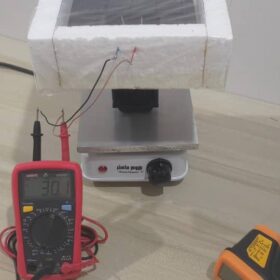
Scientists create ‘affordable’ TEG-PV generator for off-grid, low-power applications
Scientists in Malysia have tested a system that combines a PV panel and thermoelectric generators (TEGs) and have found it offers potential for “moderate” nighttime power generation. It is suitable for small household applications such as LED lights, laptops, phone chargers, and wireless routers.
U.S. International Trade Commission to investigate Runergy, Adani for patent infringement
In response to a complaint filed by Trinasolar US, the ITC intends to determine whether Runergy and Adani illegally infringe Trinasolar’s TOPCon patents.

Chinese PV Industry Brief: JA Solar enters hydrogen business
JA Solar says it has launched a hydrogen business with the establishment of JA Hydrogen, a new unit based in Beijing with CNY 100 million ($13.8 million) of registered capital.

Looming Trump tariffs drive rush on imports, push shipping costs higher
Freight costs are rising as businesses rush to import goods ahead of higher tariffs promised by US President-elect Donald Trump on Chinese and European products.

3Sun earns TÜV Rheinland certification, clearing way for PV module sales
Italian heterojunction module manufacturer 3Sun says it started production at its factory in Catania, Italy, in September.
